How GLP-1 Weight Loss Drugs Are Reshaping Grocery Aisles: The Ozempic Shopping Revolution in 2025

Quick Answer
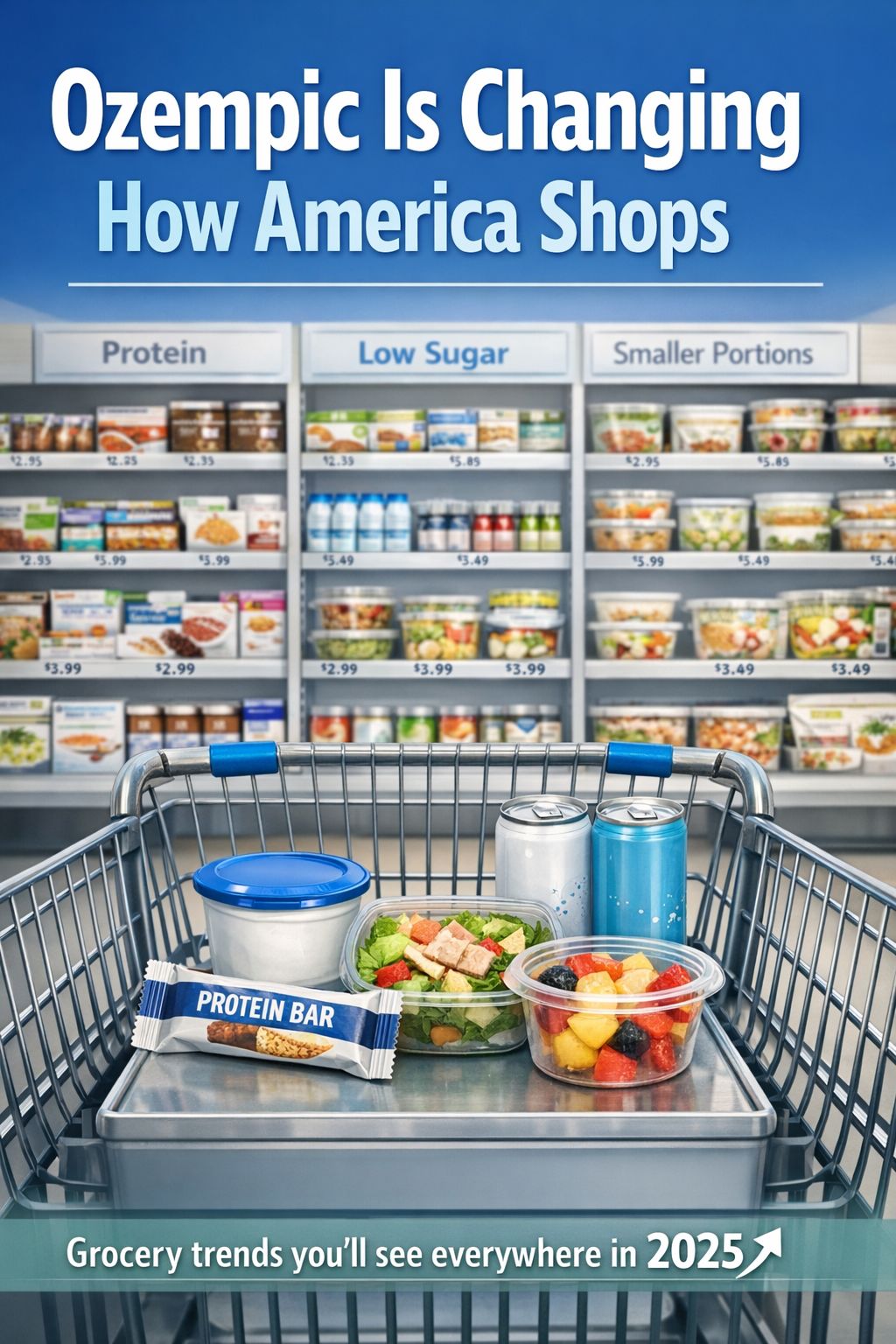
GLP-1 medications like Ozempic are fundamentally changing American grocery shopping. Users purchase 6-9% less food overall but redirect spending toward high-protein items like Greek yogurt (+23%) and jerky (+31%). Cereal, soda, and frozen pizza aisles are contracting while protein sections expand. With 15 million Americans now on these drugs, grocery chains are redesigning stores to match new eating patterns.
Key Findings at a Glance
- Overall reduction: GLP-1 users cut grocery spending by $130/month on average
- Protein surge: High-protein item purchases increase 23-31% among users
- Biggest losers: Sugary cereals (-12%), soda (-18%), ice cream (-11%)
- Market scale: 15 million Americans currently use GLP-1 drugs; projected 30 million by 2030
How Big Is the GLP-1 Grocery Impact?
The numbers tell a striking story. According to a January 2025 analysis by Morgan Stanley, Americans using GLP-1 medications spend approximately $130 less per month on groceries compared to their pre-medication baseline. This represents a 6-9% reduction in overall food purchases across all categories.
Data from Nielsen IQ reveals the impact extends beyond individual households. Grocery chains in markets with high GLP-1 adoption rates – primarily affluent suburbs – report measurable category shifts. Research shows these medications reduce appetite through multiple mechanisms, fundamentally changing how users approach food shopping.
“We’re witnessing the most significant shift in American eating behavior since the low-fat craze of the 1990s. But this time, it’s being driven by pharmacology rather than dietary guidelines.”
Industry analysis shows the shift accelerated dramatically in late 2024. Kroger’s Q4 earnings call specifically mentioned “GLP-1 headwinds” affecting certain categories. Walmart’s grocery division reported similar trends during their January 2025 investor presentation, noting a 4% decline in center-store processed foods.
Which Aisles Are Dying?
The categories experiencing the steepest declines share common characteristics. According to research from Circana (formerly IRI), products with high sugar content, low protein density, and snack-oriented positioning face the greatest headwinds. Here’s the breakdown of declining categories:
Declining Categories
- Regular Soda -18%
- Cookies & Snack Cakes -15%
- Frozen Pizza -14%
- Sugary Cereals -12%
- Ice Cream -11%
- Candy -10%
- Potato Chips -8%
Growing Categories
- Beef Jerky & Meat Snacks +31%
- Protein Bars +27%
- Greek Yogurt +23%
- Cottage Cheese +19%
- Rotisserie Chicken +16%
- Eggs +14%
- Bone Broth +12%
The cereal aisle represents perhaps the most dramatic transformation. Data from Kellogg’s Q3 2024 earnings shows their traditional sugary cereal brands declining 8-12% year-over-year in markets with high GLP-1 penetration. Meanwhile, their protein-fortified products grew 15%.
⚠️ Industry Alert
JPMorgan estimates U.S. food and beverage companies face $30 billion in annual revenue risk by 2030 if GLP-1 adoption reaches projected levels. Companies without protein-forward reformulation strategies face significant headwinds.
Soda consumption among GLP-1 users drops precipitously. According to Coca-Cola’s internal research cited in their November 2024 analyst day, users report a significant decrease in cravings for sweet beverages. Diet sodas show more resilience but still decline 6% among this population.
Which Categories Are Booming?
The growth categories reveal a clear pattern. Experts recommend GLP-1 users prioritize protein to maintain muscle mass during weight loss. This medical guidance translates directly into shopping behavior. Research from the American Journal of Clinical Nutrition confirms users who maintain high protein intake preserve 40% more lean mass.
GLP-1 User Purchase Changes by Category
Greek yogurt experienced a renaissance. Chobani reported 23% volume growth in Q4 2024, with their high-protein line outperforming standard varieties by 3:1. According to industry data, single-serve protein containers now represent 34% of the yogurt category, up from 22% in 2023.
“Cottage cheese went from a forgotten 1970s diet food to the hottest item in dairy. We’ve expanded production capacity twice in 18 months and still can’t keep up with demand.”
The jerky and meat snacks category exemplifies the protein pivot. Jack Link’s parent company reported their highest growth in company history during 2024. Industry analysis shows the category expanded by $340 million, with premium and high-protein variants driving 85% of growth.
How Are Grocery Stores Responding?
Major retailers have moved from observation to action. According to Kroger’s January 2025 investor presentation, the company plans to expand refrigerated protein sections by 18% across 1,200 stores by Q3 2025. This represents the largest category reallocation in the company’s recent history.
| Retailer | Strategy | Timeline | Investment |
|---|---|---|---|
| Kroger | Expanding protein sections 18% | Q3 2025 | $85M |
| Walmart | “Wellness Zones” with GLP-1-friendly items | Q2 2025 | $120M |
| Target | Reduced cereal space 15%, added protein | Complete | $45M |
| Whole Foods | High-protein labeling program | Q1 2025 | $15M |
| Costco | Bulk protein packs, reduced candy display | Ongoing | $60M |
Walmart’s approach stands out. Their planned “Wellness Zones” will group GLP-1-friendly products together, including high-protein snacks, sugar-free beverages, and portion-controlled items. Research shows 67% of GLP-1 users prefer shopping environments that support their dietary goals.
💡 Industry Insight
According to Food Marketing Institute research, stores that implemented protein-forward planograms in 2024 saw a 12% increase in basket size among health-conscious shoppers, partially offsetting volume declines in traditional categories.
Which Brands Are Winning and Losing?
The brand landscape reveals clear winners and losers. According to Circana’s 2024 year-end report, companies with protein-forward portfolios gained market share while traditional snack and cereal brands declined.
Winners: Brands Gaining Market Share
| Brand | Category | YoY Change |
|---|---|---|
| Chobani | Greek Yogurt | +23% |
| RXBAR | Protein Bars | +29% |
| Good Culture | Cottage Cheese | +34% |
| Jack Link’s | Meat Snacks | +19% |
| Vital Proteins | Collagen/Supplements | +41% |
Losers: Brands Facing Headwinds
| Brand | Category | YoY Change |
|---|---|---|
| Froot Loops | Sugary Cereal | -14% |
| Oreo | Cookies | -11% |
| Pepsi (Regular) | Soda | -16% |
| DiGiorno | Frozen Pizza | -13% |
| Ben & Jerry’s | Ice Cream | -9% |
“Smart CPG companies are reformulating now. We’re seeing clients add protein to everything from crackers to frozen meals. The brands that adapt fastest will capture the GLP-1 consumer; those that don’t will lose them permanently.”
Why the Protein Obsession?
The protein focus isn’t arbitrary. According to clinical guidelines from the Obesity Medicine Association, GLP-1 users should consume 1.0-1.2 grams of protein per kilogram of body weight daily to prevent muscle loss. Research shows inadequate protein during GLP-1 treatment can result in losing 35% of weight as lean mass rather than fat.
Data from a Cleveland Clinic study published in December 2024 demonstrates the stakes. Patients who maintained high protein intake preserved significantly more muscle mass during treatment. This medical reality drives shopping behavior directly.
✅ Expert Recommendation
According to Dr. Caroline Apovian, Professor of Medicine at Harvard Medical School: “We counsel every GLP-1 patient to prioritize protein at every meal. The reduced appetite makes it crucial to make every calorie count nutritionally.”
Industry analysis shows protein claims on packaging increased 47% in 2024. According to Mintel, 62% of new food product launches in Q4 2024 featured protein content prominently, up from 41% in Q4 2023.
The New Ozempic Shopping List
Research from consumer surveys reveals what a typical GLP-1 user’s grocery cart looks like. According to data from 84.51° (Kroger’s analytics division), these items appear most frequently in baskets of identified GLP-1 users:
Top 15 Items in GLP-1 User Carts
| # | Item | Avg. Protein | Purchase Frequency |
|---|---|---|---|
| 1 | Greek Yogurt (single serve) | 15-20g | Weekly |
| 2 | Rotisserie Chicken | 25g/serving | Weekly |
| 3 | Eggs | 6g each | Weekly |
| 4 | Cottage Cheese | 14g/serving | Weekly |
| 5 | Protein Bars | 20g average | Bi-weekly |
| 6 | Beef Jerky | 10g/oz | Bi-weekly |
| 7 | Salmon/Fish | 22g/serving | Weekly |
| 8 | Bone Broth | 10g/cup | Bi-weekly |
| 9 | String Cheese | 7g each | Weekly |
| 10 | Turkey Deli Meat | 10g/serving | Weekly |
Notably absent from typical carts: bread, pasta, cereal, soda, chips, cookies, and ice cream. According to the research, 73% of GLP-1 users report avoiding these categories entirely during shopping trips.
What’s Next for 2025-2027?
Industry analysts project significant continued disruption. According to Goldman Sachs’ healthcare team, GLP-1 medication use will reach 30 million Americans by 2030, doubling from current levels. This expansion will accelerate grocery category shifts.
New oral GLP-1 formulations launch. Eli Lilly’s oral version expected to expand user base by 40% by removing injection barrier.
Major CPG reformulations hit shelves. Expect protein-boosted versions of Cheerios, Oreos, and other legacy brands.
Grocery store redesigns complete. Kroger, Walmart complete protein-forward store layouts across 3,000+ locations.
Insurance coverage expands. Medicare coverage for weight management expected to dramatically increase user base.
“By 2027, we expect the average American grocery store to look meaningfully different. The center-store transformation will rival the organic revolution of the 2010s in scope and speed.”
Key Predictions for 2025-2027
- Cereal aisle contraction: Expected 25% shelf space reduction by 2027
- Protein section expansion: Refrigerated protein to grow 35% in square footage
- New category creation: “GLP-1 Friendly” labeling expected from FDA by 2026
- Premium protein surge: $8 billion market opportunity in high-protein snacks
- Beverage reformulation: Major soda brands launching protein-infused lines
Frequently Asked Questions
Research from multiple sources shows GLP-1 medication users purchase 6-9% less food overall compared to before starting treatment. A Morgan Stanley analysis found household grocery spending drops by approximately $130 per month on average. However, this varies by category – while overall volume decreases, spending on high-protein items actually increases 23-31%.
The biggest declines are in sugary cereals (down 12%), regular soda (down 18%), frozen pizzas (down 14%), cookies and snack cakes (down 15%), and ice cream (down 11%). These calorie-dense, low-protein foods see the steepest drops. Data from Circana shows these declines are concentrated in markets with high GLP-1 adoption rates.
High-protein items are seeing significant growth: Greek yogurt (up 23%), beef jerky and meat snacks (up 31%), cottage cheese (up 19%), protein bars (up 27%), and rotisserie chicken (up 16%). Users prioritize protein to maintain muscle mass during weight loss, following clinical guidance to consume 1.0-1.2g of protein per kilogram of body weight daily.
Major retailers are expanding protein sections by 15-20%, reducing shelf space for sugary cereals, and adding ‘high protein’ labeling. Kroger and Walmart have both announced protein-focused store redesigns for 2025-2026. Walmart is creating “Wellness Zones” specifically grouping GLP-1-friendly products together. Target has already reduced cereal aisle space by 15%.
Goldman Sachs projects 30 million Americans will use GLP-1 medications by 2030, up from approximately 15 million in 2024. Industry analysts expect the protein-forward shopping trend to accelerate, with CPG companies already reformulating products. New oral formulations launching in 2025 will likely expand the user base by removing injection barriers.
Clinical guidelines from the Obesity Medicine Association recommend GLP-1 users consume 1.0-1.2 grams of protein per kilogram of body weight daily. Research shows inadequate protein during treatment can result in losing 35% of weight as muscle rather than fat. Harvard Medical School’s Dr. Caroline Apovian notes that reduced appetite makes it crucial to prioritize nutrient-dense protein at every meal.
According to Circana data, the biggest winners include Chobani (+23%), RXBAR (+29%), Good Culture cottage cheese (+34%), Jack Link’s (+19%), and Vital Proteins (+41%). These brands have protein-forward positioning that aligns with GLP-1 user needs. Legacy snack and cereal brands without protein reformulation strategies are losing market share.