The Death of the ‘Happy Meal’? How Fast Food is Pivoting for a Healthier America in 2025

Quick Answer
Fast food chains are undergoing a massive transformation as weight-loss drugs reshape American eating habits.
By 2030, up to 30 million Americans could be using GLP-1 medications like Ozempic and Wegovy, reducing their fast food spending by 8% and cutting consumption of burgers, fries, and calorie-dense foods by 10%.
In response, McDonald’s, Chipotle, Sweetgreen, and Panda Express are pivoting from traditional “Happy Meal” combos to protein bowls, cantina-style dishes, and nutrient-dense options with up to 106 grams of protein per serving.
Key Findings
- 30 million Americans (9% of the population) are projected to use GLP-1 weight-loss drugs by 2030, up from just 0.5% in early 2024 – a 2,900% increase in adoption.
- Fast food spending drops 8% among GLP-1 users, with ultra-processed foods declining 10% and soda/alcohol consumption down 66%, according to Cornell University research.
- Protein bowls dominate 2025 menus: Chipotle launched 81-gram protein bowls, Sweetgreen offers 106-gram protein bowls, and Panda Express introduced 76-gram protein plates.
- Traditional sales are struggling: Chipotle’s bowl sales fell 4% in Q2 2025, McDonald’s saw a 3.6% same-store sales drop in Q1, and Sweetgreen experienced an 11.7% traffic decline.
How Weight-Loss Drugs Are Killing the Traditional Fast Food Model in 2025
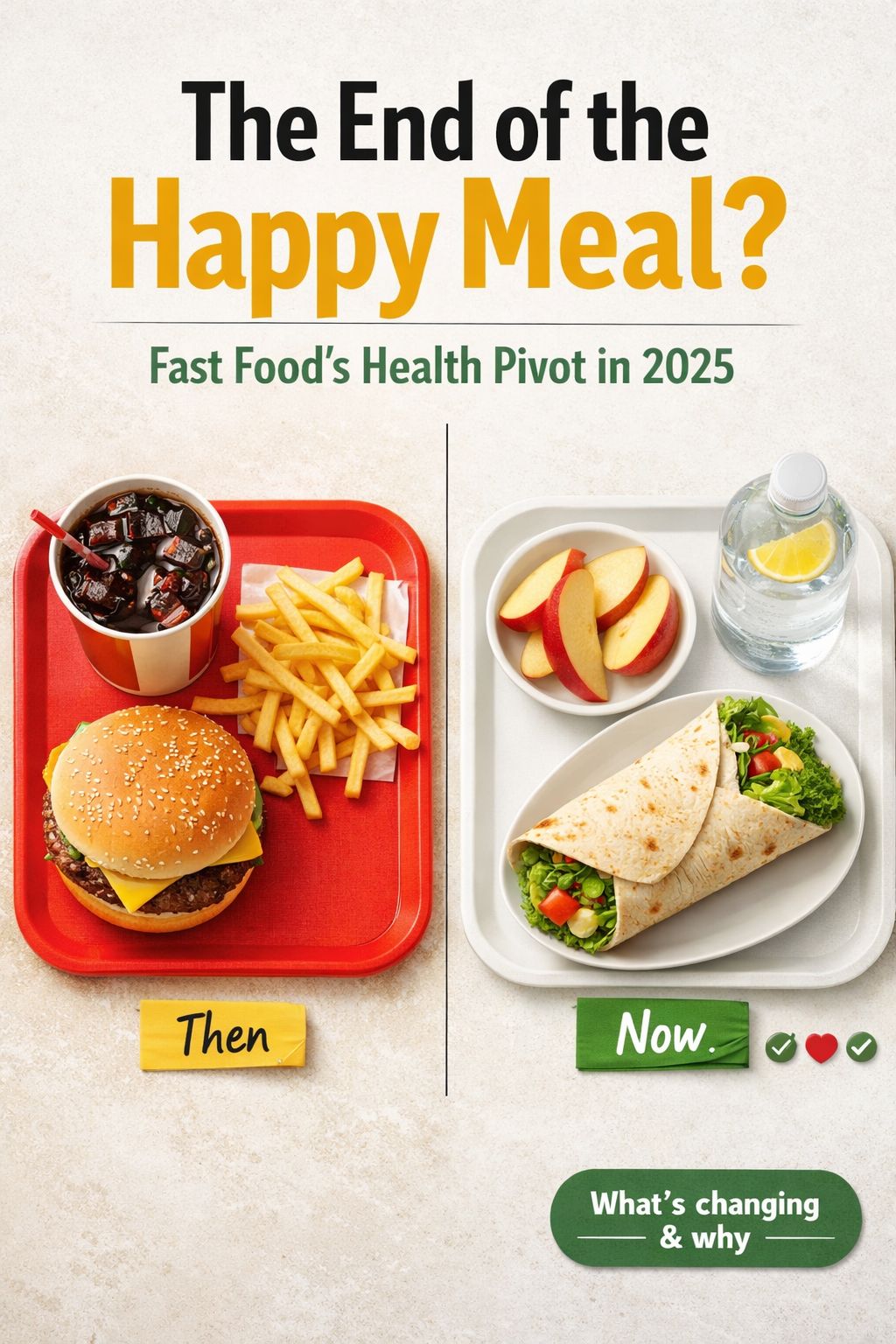
The iconic Happy Meal – symbol of American fast food culture for over four decades – is facing an existential crisis it never anticipated.
It’s not coming from health activists, government regulators, or even changing consumer preferences.
The threat is pharmaceutical.
GLP-1 (glucagon-like peptide-1) drugs like Ozempic, Wegovy, Mounjaro, and Zepbound are reshaping not just waistlines, but the entire $1.2 trillion fast food industry.
These medications work by mimicking a naturally occurring hormone that slows gastric emptying and acts on the brain’s appetite control centers, making people feel full longer and dramatically reducing cravings.
And the result is that Americans are eating less, spending less, and completely rethinking what they order when they do visit fast food restaurants.

The shift from calorie-dense Happy Meals to nutrient-packed protein bowls represents the most dramatic menu transformation in fast food history.
What Are GLP-1 Drugs and Why Are They Reshaping American Dining Habits?
GLP-1 receptor agonists represent the most significant pharmaceutical breakthrough in weight management in decades.
The global GLP-1 receptor agonist market was valued at $70.08 billion in 2025 and is projected to reach $201.79 billion by 2033, growing at a 12.78% CAGR.
Semaglutide (sold as Ozempic and Wegovy) dominates the market with a 37.77% share, while tirzepatide (Mounjaro and Zepbound) is experiencing the fastest growth due to its dual GIP/GLP-1 mechanism.
Weight-loss drugs are “destroying restaurants” by dramatically changing dining habits – people are ordering significantly less food, sometimes only a small dish, and report feeling full quickly.
The Pharmacological Impact on Appetite
Dr. Jaime Almandoz, endocrinologist at UT Southwestern Medical Center, explains that GLP-1 drugs work through multiple mechanisms to suppress appetite.
They slow gastric emptying, meaning food stays in the stomach longer, creating prolonged feelings of fullness.
They act directly on the hypothalamus, the brain’s appetite control center, reducing hunger signals.
They alter taste preferences, making fatty, calorie-dense foods less appealing while increasing cravings for vegetables and lean proteins.
Studies show GLP-1 users drink 66% less soda and alcohol, eat significantly smaller meals, and report thinking about food far less frequently.
While GLP-1 drugs are effective for weight loss, they can cause significant muscle loss – up to 40% of total weight lost can be muscle mass, particularly concerning for older adults. Medical supervision, increased protein intake, and strength training are essential.
The $428 Million Problem: How GLP-1 Drugs Are Decimating Fast Food Sales
Cornell University research analyzing 150,000 U.S. households reveals the stark financial impact of GLP-1 adoption on the food industry.
Households using these medications reduce their grocery spending by an average of 5.3% within six months.
Higher-income households cut spending by over 8%.
Spending at fast-food restaurants, coffee shops, and quick-service eateries drops by approximately 8%.
Ultra-processed and calorie-dense foods see the sharpest declines, with spending dropping around 10% on sweets, savory snacks, and fried foods.
Real-World Sales Data Shows the Damage
The theoretical projections are already becoming reality across major fast food chains in 2025.
McDonald’s: Experienced a 3.6% drop in U.S. same-store sales in Q1 2025, its weakest performance since the pandemic.
Chipotle: Bowl sales declined 4% in Q2 2025, with restaurant transactions falling 4.9%, marking the first same-store sales drop since 2020.
Sweetgreen: The fast-casual salad chain saw a 9.5% decline in Q3 2025, including an 11.7% drop in traffic – its stock plunged 79%.
Wendy’s: The burger chain experienced a 4.7% comparable sales decline in Q3 2025 and announced plans to close hundreds of locations.
Jack in the Box: Posted a devastating 7.4% decline in same-store sales in Q4 2025, its worst performance in years.
| Fast Food Chain | 2025 Sales Change | Primary Impact | Stock Performance |
|---|---|---|---|
| McDonald’s | -3.6% (Q1) | Lower spend per visit | -1.4% annual |
| Chipotle | -4.0% (Q2) | Transaction decline | -39% annual |
| Sweetgreen | -9.5% (Q3) | Traffic collapse | -79% annual |
| Wendy’s | -4.7% (Q3) | Location closures | -49% annual |
| Jack in the Box | -7.4% (Q4) | Menu mix decline | Store closures planned |
These drugs are an “existential threat” to the food industry, especially the processed food industry. The convergence of various factors is creating an unprecedented situation.
Fast Food Stock Performance vs. GLP-1 Adoption in 2025
Interactive chart showing the correlation between GLP-1 drug adoption milestones and restaurant stock performance throughout 2025.
The Protein Bowl Revolution: How Fast Food Chains Are Fighting Back
Faced with an existential crisis, fast food chains are executing the most dramatic menu transformation in industry history.
What’s the strategy? Abandon burgers and fries in favor of protein-packed bowls, cantina-style meals, and nutrient-dense options that appeal to health-conscious consumers and GLP-1 users alike.
According to Restaurant Business Online, protein headlined menus in 2025, with restaurants competing to offer high-protein bowls, plates, smoothies, and even coffee.
Approximately 70% of Americans now prioritize protein intake, with over a third increasing their consumption in the past year.
Chipotle’s High Protein Menu: 81 Grams Per Bowl
In December 2025, Chipotle launched its first-ever High Protein Menu in the U.S. and Canada, marking a strategic pivot from its traditional burrito-and-bowl model.
The Double High Protein Bowl features double Adobo Chicken, light white rice, black beans, fajita veggies, fresh tomato salsa, Monterey Jack cheese, and extra romaine lettuce, delivering 81 grams of protein, 11 grams of fiber, and 760 calories.
The High Protein-High Fiber Bowl contains Adobo Chicken, light brown rice, black beans, fajita veggies, roasted chili-corn salsa, fresh tomato salsa, and romaine lettuce, providing 46 grams of protein, 14 grams of fiber, and 540 calories – explicitly marketed as “GLP-1 friendly.”
The High Protein-Low Calorie Salad includes Adobo Chicken, Supergreens lettuce mix, fajita veggies, fresh tomato salsa, and guacamole, with 36 grams of protein, 10 grams of fiber, and only 470 calories.
Most innovative is the High Protein Cup – a 4-ounce side of Adobo Chicken serving as a snack or protein addition, containing 32 grams of protein and just 180 calories.
Chipotle collaborated with athletes Josh Hart, Samantha Milton, and Kylie Sakaida to feature their preferred high-protein builds, launching January 5, 2026.
If you’re looking to recreate Chipotle’s high-protein bowls at home, check out our guide to lean chicken breast recipes that deliver similar protein content at a fraction of the cost. You can also explore our collection of healthy chicken salad recipes for meal prep-friendly options.
Sweetgreen’s 106-Gram Protein Powerhouse
Sweetgreen introduced the Power Max Protein Bowl with a staggering 106 grams of protein, setting a new industry benchmark.
The chain also added steak as an elevated protein option and transitioned to extra-virgin olive oil for cooking proteins, grains, and vegetables in late 2023.
In January 2025, Sweetgreen launched seed-oil-free menu items featuring Green Goddess Ranch made with avocado oil, positioning itself as the health-conscious alternative.
CEO Jonathan Neman emphasized a “long-overdue conversation about food” and the benefits of olive and avocado oil over inflammatory seed oils.
Panda Express Enters the Protein Wars
Panda Express launched five Balanced Protein Plates with some offering up to 76 grams of protein.
The Double Protein plate features a double serving of Grilled Teriyaki Chicken (76g protein).
The Harmonious Macros Plate combines Broccoli Beef and Teriyaki Chicken (57g protein).
These offerings represent a dramatic departure from Panda Express’s traditionally carb-heavy Orange Chicken and fried rice combinations.
Subway’s “No Bready Bowls” Strategy
Subway transformed its sandwich model into protein bowls with its “No Bready Bowls” lineup.
“The Beast” bowl provides 65 grams of protein from various meats and cheese alongside greens and vegetables.
A lighter version of “The Beast” salad contains 34 grams of protein for calorie-conscious consumers.
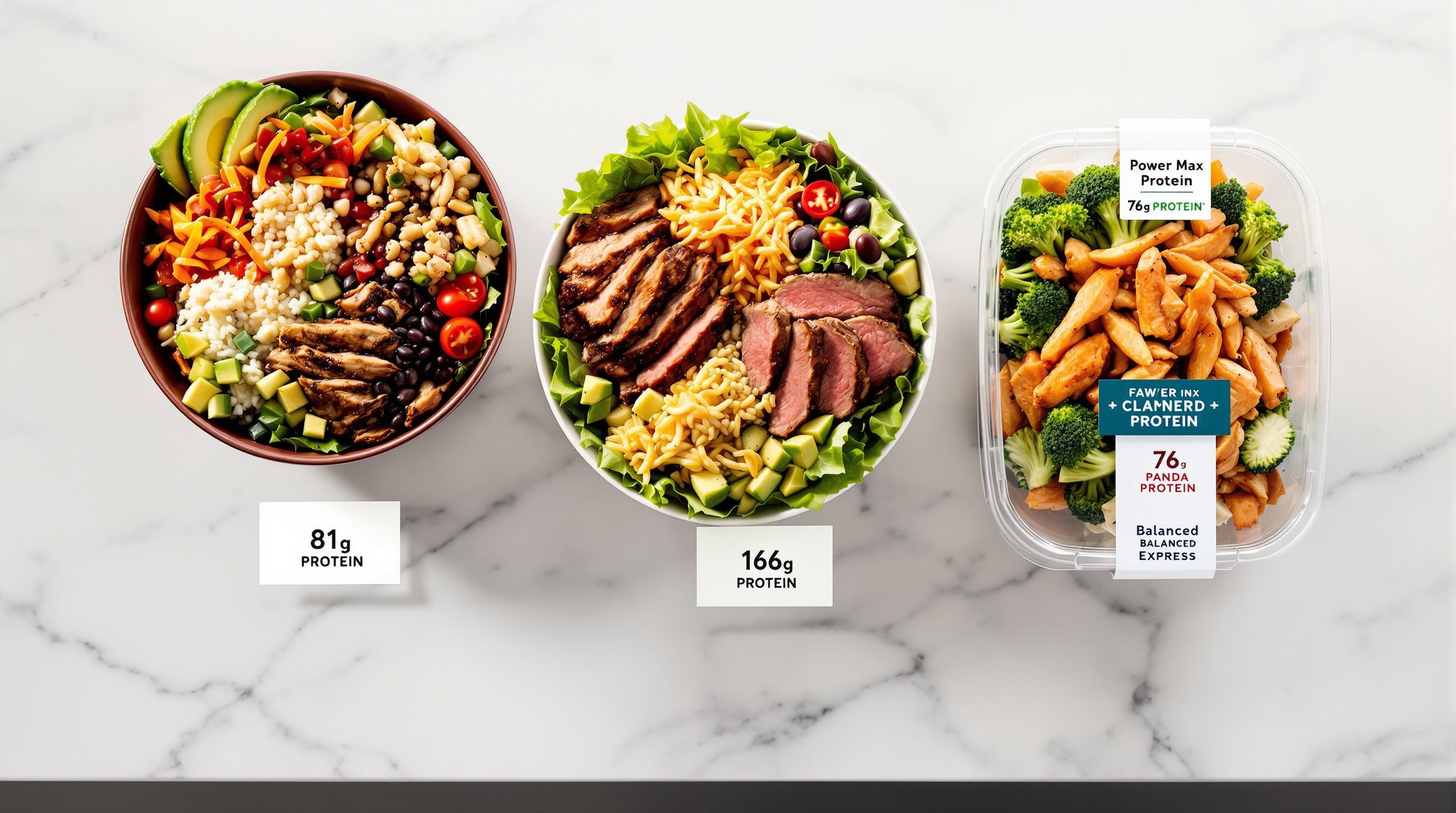
The protein bowl arms race: Chipotle (81g), Sweetgreen (106g), and Panda Express (76g) compete for health-conscious consumers.
What’s Happening to Traditional Burgers, Fries, and Kids’ Meals?
While protein bowls surge, traditional fast food staples are experiencing a quiet decline.
The Burger’s Mixed Fortunes
Burger King experienced a 1.1% U.S. same-store sales decline in Q1 2025 before rebounding with 3.2% growth in Q3, driven by product innovation.
The “Whopper by You” customization platform and new variants like the BBQ Brisket Whopper exceeded expectations.
However, the broader burger category shows weakness: Restaurant Brands International missed quarterly earnings expectations as same-store sales fell at Burger King, Popeyes, and Tim Hortons.
The fundamental challenge is consumers now increasingly view $15-20 burger combos as poor value compared to $10-12 protein bowls with superior nutrition.
French Fries: The $28.6 Billion Question
Despite concerns, the frozen French fries market shows resilience – projected to grow from $17.2 billion in 2024 to $28.6 billion by 2034.
However, social media mentions of French fries declined 11.84%, though they remain on 53.36% of menus.
The disconnect? Frozen fries are growing in grocery retail (for home consumption), while restaurant french fry orders are declining as GLP-1 users avoid fried, calorie-dense sides.
Rising health consciousness is driving demand for alternatives like sweet potato fries, which are projected to dominate with a 58% market share in the frozen category.
A study published in August 2025 in BMJ found a link between frequent French fry consumption and increased risk of type 2 diabetes, further accelerating consumer shifts toward healthier options.
The Happy Meal Transformation
While specific Happy Meal decline statistics aren’t available for 2025, broader trends tell the story.
Americans aged 18-24 are 90% more likely to eat every meal alone in 2025 compared to 2003, according to the World Happiness Report.
This solo dining trend correlates with lower happiness levels and reduced demand for family-oriented meals like Happy Meals.
In 2016, 91% of parents purchased fast food for children from major chains, but only 50% received healthier sides (down from 67% in 2013).
What’s McDonald’s response? Expanding into “Adult Happy Meals” with the 2025 McDonaldland Meal featuring Quarter Pounders, collectible tins, stickers, and postcards – capitalizing on nostalgia rather than children’s nutrition.
The chain also introduced special Disney Happy Meals in December 2025 for Disneyland’s 70th anniversary, offering two toys per meal from Disney, Marvel, Pixar, and Star Wars franchises.
Parents looking for healthier alternatives to fast food kids’ meals can explore our family-friendly dinner ideas that kids actually enjoy. For quick weeknight options, our crockpot recipes deliver nutritious meals with minimal effort.
How Restaurant Industry Experts Are Responding to the GLP-1 Crisis
The restaurant industry’s reaction to GLP-1 drugs ranges from adaptive innovation to outright rejection.
The Rejection Camp: Gordon Ramsay’s Profanity-Filled Stand
Celebrity chef Gordon Ramsay vehemently rejected creating “Ozempic menus,” calling it “absolute bulls—“ in a profanity-filled rant.
“There’s no f—ing way we’re giving in to the Mounjaro jab,” Ramsay declared.
He criticized the notion of making diners “feel like less of a fat f—” and insisted restaurants should not cater specifically to medication users.
The Adaptation Camp: Smaller Portions and Nutritious Options
Many restaurateurs are taking a more pragmatic approach.
Sammy Musovic, owner of Sojourn and Sojourn Social in NYC, began offering clients the option to remove sides from mains to avoid overwhelming Ozempic users who feel full faster.
Nima Safaei, founder of London restaurants 40 Dean Street and 64 Old Compton Street, observed customers ordering just drinks or a couple of starters to share rather than full three-course meals.
Andrew Gray, founder of Fables & Company wine bars, noted a lack of demand for larger dishes, with guests increasingly preferring smaller portions for better social experiences.
The Innovation Camp: Purpose-Built GLP-1 Products
Some companies are creating entirely new product lines targeting GLP-1 users.
Nestlé introduced Vital Pursuit, offering high-protein, high-fiber frozen meals in portion-controlled sizes specifically designed for medication users.
Smoothie King launched a “GLP-1 Support” smoothie line emphasizing protein-rich, fiber-rich, and zero-added-sugar options.
Conagra Brands added “GLP-1 Friendly” or “On Track” labels to existing products, helping consumers identify suitable options even when formulations haven’t changed.
Danone is expanding Greek yogurt options, noting that yogurt consumption is nearly three times higher in GLP-1-using households.
People on GLP-1s can lose significant muscle mass – up to 40% of weight lost – which is not regained even if weight is regained later, potentially leading to individuals being “fatter, biochemically, in their body.” This highlights a critical need for product development focusing on protein-rich options.
The Research Camp: Strategic Partnerships
Nestlé formed strategic partnerships with the University of California to advance innovation in nutrition and health science, anticipating long-term shifts in consumer behavior.
The company recognizes that widespread GLP-1 adoption isn’t a temporary trend but a permanent transformation of eating patterns.
Harvard Business School Professor Regina Herzlinger believes these drugs will profoundly alter the $76 billion weight loss industry, moving away from traditional diet-and-exercise models toward drug-based solutions.
The GLP-1 Revolution Timeline: 2024-2030
Interactive timeline showing the projected correlation between GLP-1 adoption growth and fast food industry transformation.
The Financial Impact: Wall Street’s Harsh Verdict on Fast Food in 2025
Restaurant company valuations took a significant hit on Wall Street in 2025 as GLP-1 concerns materialized into real sales declines.
Restaurant stocks fell about 7% overall, with the median restaurant company stock down 16%.
Fast-casual chain stocks plummeted 38% – the steepest decline in any restaurant category.
Nearly a third of restaurant visits involved some sort of deal as chains desperately competed for diminishing customer traffic.
Market Valuation Casualties
Chipotle’s stock declined 39% in 2025, its worst performance in a decade, despite historically being resilient during economic downturns.
Sweetgreen’s stock plunged 79% amid brutal sales slides.
Wendy’s stock fell 49% as the chain announced hundreds of location closures.
Jack in the Box stock collapsed after three consecutive quarters of accelerating same-store sales declines.
Goldman Sachs Revises Projections Downward
Goldman Sachs Research revised its global market forecast for anti-obesity drugs downward to $95 billion by 2030 (from $130 billion).
The U.S. market peak forecast was lowered to $70 billion (from $95 billion).
Reasons cited include higher price erosion, stricter insurance coverage, and patient segmentation.
Analysts project oral GLP-1 drugs will capture 24% ($22 billion) of the 2030 market, with Eli Lilly’s oral formulation expected to dominate with a 60% share ($13.6 billion).
The McDonald’s $428 Million Annual Risk
For McDonald’s specifically, analysts calculate that even a modest 1% reduction in restaurant visits could cost $428 million annually.
If GLP-1 adoption reaches projected levels and reduces visits by 10%, the annual impact could exceed $4 billion.
The company’s aggressive expansion plans – growing from 40,000 to 50,000 restaurants by 2027 – now appear increasingly risky if demand weakens due to changing consumer habits.
Lower-income demographics, historically McDonald’s core customer base, are also projected to be significant GLP-1 adopters, compounding the risk.
What Foods Are GLP-1 Users Actually Eating? The Cornell Study Reveals All
The most comprehensive analysis of GLP-1 user eating habits comes from Cornell University and data firm Numerator, examining 150,000 U.S. households.
What’s Declining
Ultra-processed foods see spending drops of approximately 10% – the steepest category decline.
Sweets and savory snacks fall by around 10%.
Soda consumption drops 66%, along with alcohol consumption.
Fast-food breakfast visits decrease nearly 4%.
Fast-food dinner visits decline 6%.
Candy and chocolate purchases decrease when users discontinue medication (suggesting appetite suppression is the key mechanism).
What’s Increasing
Greek yogurt consumption is nearly three times higher in GLP-1-using households, according to Danone.
Fresh vegetables and salads see increased demand as taste preferences shift away from fatty foods.
Lean protein sources (chicken breast, fish, turkey) experience higher purchase rates.
High-fiber foods gain popularity as users seek nutrient-dense options to maintain satiety.
Protein-fortified products see surging demand, from protein coffee to protein-infused cold foam.
If you’re focusing on high-protein, nutrient-dense meals at home, explore our omega-3-rich salmon recipes that deliver 25-30 grams of protein per serving. Our collection emphasizes simple preparation methods that preserve nutritional value while maximizing flavor.
Demographic Differences in Adoption
The share of U.S. households with at least one GLP-1 user rose from 11% in late 2023 to over 16% by mid-2024.
Weight-loss users tend to be younger (ages 25-45) and wealthier, with household incomes above $75,000.
Diabetes users are older (ages 50+) and more evenly distributed across income groups.
Women use GLP-1 agonists at higher rates than men across most age groups, with the highest use among women aged 50-64 (20%).
Women aged 30-49 are more than twice as likely as their male peers to use these medications.
The 2026-2027 Outlook: What’s Coming Next for Fast Food?
Restaurant trend forecasters predict several key developments will define the next phase of this transformation.
Fiber Joins Protein as a Menu Headline
While protein dominated 2025, fiber is gaining prominence in 2026 as consumers become more knowledgeable about gut health.
High-protein, high-fiber bowls (like Chipotle’s 46g protein/14g fiber option) represent the next evolution.
This addresses a critical concern: GLP-1 users need fiber to maintain digestive health while experiencing slowed gastric emptying.
The “Bites” Category Expands
The evolution of “bites” into a separate menu category – driven by snacking trends and appetite-reducing medications – will accelerate.
Chipotle’s High Protein Cup (32g protein, 180 calories) represents the prototype: small, portable, protein-dense, and affordable at $2-3.
Expect competitors to launch similar snack-sized protein options positioned between beverages and full meals.
Value Menus Get a Nutritional Makeover
Traditional value menus emphasizing quantity (dollar menu burgers, large fries) will shift toward nutritional value.
McDonald’s permanent $5 Value Meal and new McValue Menus with “Buy One, Add One for $1” offers represent this transition.
Burger King’s “Reclaim the Flame” plan includes 85% to 90% of U.S. locations renovated by 2028, with updated menus emphasizing customization and healthier options.
Oral GLP-1 Drugs Accelerate the Shift
Goldman Sachs analysts forecast oral weight loss drugs will capture 24% ($22 billion) of the 2030 market.
Eli Lilly’s oral GLP-1 (orforglipron) is projected to have a 60% share ($13.6 billion) of the daily oral segment.
Oral formulations will dramatically increase accessibility and compliance, potentially doubling the user base from current projections.
This means the 30 million user estimate for 2030 could climb to 50-60 million if oral medications prove as effective as injectables.
Restaurant Closures and Consolidation
Expect continued closures of underperforming locations, particularly in the fast-casual “bowl” segment that ironically helped pioneer the trend.
Jack in the Box announced plans to close 150-200 stores.
Wendy’s is closing hundreds of locations over the next year.
Sweetgreen’s 79% stock decline makes it a potential acquisition target for larger chains seeking to quickly enter the healthy fast-casual space.
When GLP-1 users discontinue medication, their food spending tends to revert to pre-adoption levels, suggesting appetite suppression – not permanent behavior change – is the primary mechanism. This creates uncertainty about whether current sales declines represent permanent shifts or temporary impacts during the medication adoption curve.
GLP-1 Adoption by U.S. Region & Restaurant Impact (2025)
Interactive choropleth map showing GLP-1 household adoption rates correlated with fast food restaurant closures and protein bowl menu launches by region.
Actionable Insights: What This Means for Consumers, Investors, and the Industry
For Consumers
More Nutritious Options: The silver lining of the GLP-1 crisis is an unprecedented expansion of healthy, protein-rich fast food options that benefit all consumers, not just medication users.
Better Value for Health-Conscious Diners: Competition for health-focused customers is driving prices down on protein bowls and nutrient-dense meals.
Transparency Increases: Chains are providing detailed nutritional information, calorie counts, and macro breakdowns to compete for the health-conscious segment.
For Investors
Avoid Traditional Fast Food Stocks: Companies heavily dependent on burgers, fries, and calorie-dense offerings face structural headwinds as GLP-1 adoption accelerates.
Consider Protein-Focused Chains: Restaurants that successfully pivot to high-protein, nutrient-dense menus may outperform, though 2025 data shows even these aren’t immune to traffic declines.
Watch Pharmaceutical Companies: Eli Lilly and Novo Nordisk are the clear winners, with the GLP-1 market projected to reach $201.79 billion by 2033.
Monitor Grocery Retailers: As dining out declines, home cooking may increase, benefiting grocery stores – though overall food spending still drops 5-8% among GLP-1 users.
For Restaurant Operators
Immediate Actions (0-6 Months):
- Add at least two high-protein, low-calorie menu items (40+ grams protein, under 600 calories)
- Offer customization options that allow removing sides or reducing portions
- Provide detailed nutritional information prominently on menus and apps
- Test “snack-sized” protein options priced under $5
Medium-Term Strategy (6-18 Months):
- Redesign menu architecture to feature protein-first options prominently
- Develop “GLP-1 friendly” designations or similar health-focused labeling
- Partner with registered dietitians to create medically-informed menu options
- Invest in kitchen equipment for healthier preparation methods (grilling, air-frying vs. deep-frying)
Long-Term Transformation (18+ Months):
- Consider rebranding from “fast food” to “fast casual” or “quick healthy dining”
- Develop strategic partnerships with healthcare providers and weight management programs
- Create subscription or membership models targeting health-conscious repeat customers
- Explore acquisition opportunities in the struggling fast-casual health segment
Conclusion: The End of an Era, The Beginning of Another
The iconic Happy Meal – and everything it represented – isn’t literally dying, but it’s being forced to evolve in ways unimaginable just five years ago.
GLP-1 drugs represent the most significant external disruption to the fast food industry in its 70-year history, more impactful than health campaigns, documentary exposés, or regulatory interventions.
By 2030, with 30-50 million Americans using appetite-suppressing medications, fast food chains face a stark choice: transform or perish.
The winners will be those who recognize this isn’t a temporary trend to wait out, but a permanent transformation of American eating habits.
The transition from burgers-and-fries to protein-bowls-and-cantina-meals is already underway, accelerating faster than industry analysts predicted.
For consumers, this means unprecedented access to healthier fast food options at competitive prices.
For the industry, it means the most dramatic menu transformation, business model disruption, and competitive reshuffling since Ray Kroc opened the first McDonald’s franchise in 1955.
The Happy Meal era – defined by calorie-dense combos, family-oriented marketing, and indulgent treats – is giving way to the Protein Bowl era, characterized by nutrient density, customization, and health optimization.
Whether this transformation ultimately makes Americans healthier remains to be seen, but one thing is certain: the fast food industry will never be the same.
Frequently Asked Questions (FAQ)
Sources & Citations
- EY-Parthenon. (2024). “Use of GLP-1 Drugs by Dieters May Impact Snack Brands.” https://www.ey.com/en_us/insights/strategy/use-of-glp-1-drugs-by-dieters-may-impact-snack-brands
- J.P. Morgan Research. (2024). “Obesity Drugs Market Analysis.” https://www.jpmorgan.com/insights/global-research/current-events/obesity-drugs
- Grand View Research. (2025). “GLP-1 Receptor Agonist Market Report 2025-2033.” https://www.grandviewresearch.com/industry-analysis/glp-1-receptor-agonist-market
- Cornell University & Numerator. (2025). “Ozempic is Changing the Foods Americans Buy.” https://news.cornell.edu/stories/2025/12/ozempic-changing-foods-americans-buy
- Restaurant Business Online. (2025). “Food & Drink Trends Defined 2025.” https://www.restaurantbusinessonline.com/food/food-drink-trends-defined-2025
- Chipotle Mexican Grill. (December 18, 2025). “Chipotle Unveils Its First-Ever High Protein Menu.” https://newsroom.chipotle.com/2025-12-18-CHIPOTLE-UNVEILS-ITS-FIRST-EVER-HIGH-PROTEIN-MENU-FEATURING-A-NEW-SNACK-READY-HIGH-PROTEIN-CUP
- Chipotle Mexican Grill. (July 23, 2025). “Chipotle Announces Second Quarter 2025 Results.” https://newsroom.chipotle.com/2025-07-23-CHIPOTLE-ANNOUNCES-SECOND-QUARTER-2025-RESULTS
- Eat This, Not That. (2025). “Fast Food Chains Struggling in 2025.” https://www.eatthis.com/fast-food-chains-struggling-2025/
- Restaurant Business Online. (2025). “Restaurant Company Valuations Took Big Hit on Wall Street in 2025.” https://www.restaurantbusinessonline.com/financing/restaurant-company-valuations-took-big-hit-wall-street-2025
- Restaurant Dive. (2025). “Tracking Same-Store Sales at 24 Major Restaurant Chains.” https://www.restaurantdive.com/news/tracking-same-store-sales-24-major-restaurant-chains/742371/
- British Brief. (2025). “Heston Blumenthal: Weight Loss Drugs Are Harming Restaurants.” https://britbrief.co.uk/business/retail/blumenthal-weight-loss-drugs-harming-restaurants.html
- Food Dive. (2025). “Weight Loss Drugs Are Shaking Up Big Food, Ag and Health.” https://www.fooddive.com/news/weight-loss-drugs-shaking-big-food-ag-health-experts-weigh/722741/
- Dallas News. (February 13, 2025). “GLP-1 Weight Loss Drugs and Ozempic Impact on Restaurants and Dining.” https://www.dallasnews.com/food/2025/02/13/glp-1-weight-loss-drugs-ozempic-impact-on-restaurants-dining/
- New Atlas. (2025). “Ozempic Food Economy Impact.” https://newatlas.com/diet-nutrition/ozempic-food-economy-impact
- AInvest. (2025). “GLP-1 Drugs: Silent Killer of Fast Food Profits.” https://www.ainvest.com/news/glp-1-drugs-silent-killer-fast-food-profits-2506/
- Goldman Sachs. (2025). “The Anti-Obesity Drug Market May Prove Smaller Than Expected.” https://www.goldmansachs.com/insights/articles/the-anti-obesity-drug-market-may-prove-smaller-than-expected
- CNBC. (December 16, 2025). “Obesity Pills From Novo Nordisk, Eli Lilly Are Coming.” https://www.cnbc.com/2025/12/16/healthy-returns-obesity-pills-from-novo-nordisk-eli-lilly-are-coming.html
- Restaurant Business Online. (January 7, 2025). “Sweetgreen Pushes Protein and Seed-Free Oils with Menu Launch.” https://www.restaurantbusinessonline.com/food/sweetgreen-pushes-protein-seed-free-oils-menu-launch
- Food Republic. (2025). “Chain Restaurant Bowl High Protein Subway.” https://www.foodrepublic.com/1938262/chain-restaurant-bowl-high-protein-subway/
- Accio. (2025). “Burger King Sales Trend 2025.” https://www.accio.com/business/burger-king-sales-trend-2025
- Restaurant Dive. (2025). “Jack in the Box Fiscal Q4 Sales Slump.” https://www.restaurantdive.com/news/jack-in-the-box-fiscal-q4-sales-slump/806021/
- New York Times. (March 20, 2025). “Americans Solo Dining Happiness.” https://www.nytimes.com/2025/03/20/us/americans-solo-dining-happiness.html
- UConn Rudd Center. (2018). “Healthier Kids Meals Parent Survey Report.” https://uconnruddcenter.org/wp-content/uploads/sites/2909/2020/09/272-10-Healthier-Kids-Meals-Parent-Survey-Report_Release_8_31_18.pdf
- Taste of Home. (December 2025). “McDonald’s Disney Happy Meal December 2025.” https://www.tasteofhome.com/article/mcdonalds-disney-happy-meal-december-2025/
- Fox News. (2025). “Gordon Ramsay Calls Ozempic Restaurant Menus ‘Absolute Bulls—‘.” https://www.foxnews.com/entertainment/gordon-ramsay-calls-ozempic-restaurant-menus-absolute-bulls-profanity-filled-rant
- Daily Mail. (2025). “Is Ozempic Killing the Restaurant Industry?” https://www.dailymail.co.uk/femail/article-14010613/ozempic-restaurant-industry-profits.html
- Food and Wine. (2025). “GLP-1 Medications Driving Changes in Food Industry.” https://www.foodandwine.com/glp-1-medications-driving-changes-in-food-industry-11868730
- American International Foods. (October 20, 2025). “GLP-1 Medication Effect.” https://www.americaninternationalfoods.com/2025/10/20/glp-1-medication-effect/
- Harvard Business School. (2025). “Drugs Will Reshape the Weight Loss Industry.” https://www.library.hbs.edu/working-knowledge/drugs-will-reshape-the-weight-loss-industry-but-habit-change-might-be-elusive
- Restaurant Business Online. (2025). “Chipotle Sales Downturn: It’s Not Us, It’s Them.” https://www.restaurantbusinessonline.com/operations/chipotle-sales-downturn-its-not-us-its-them