Shrinkflation Hall of Shame 2026: 20 Products That Got Smaller While Prices Stayed the Same

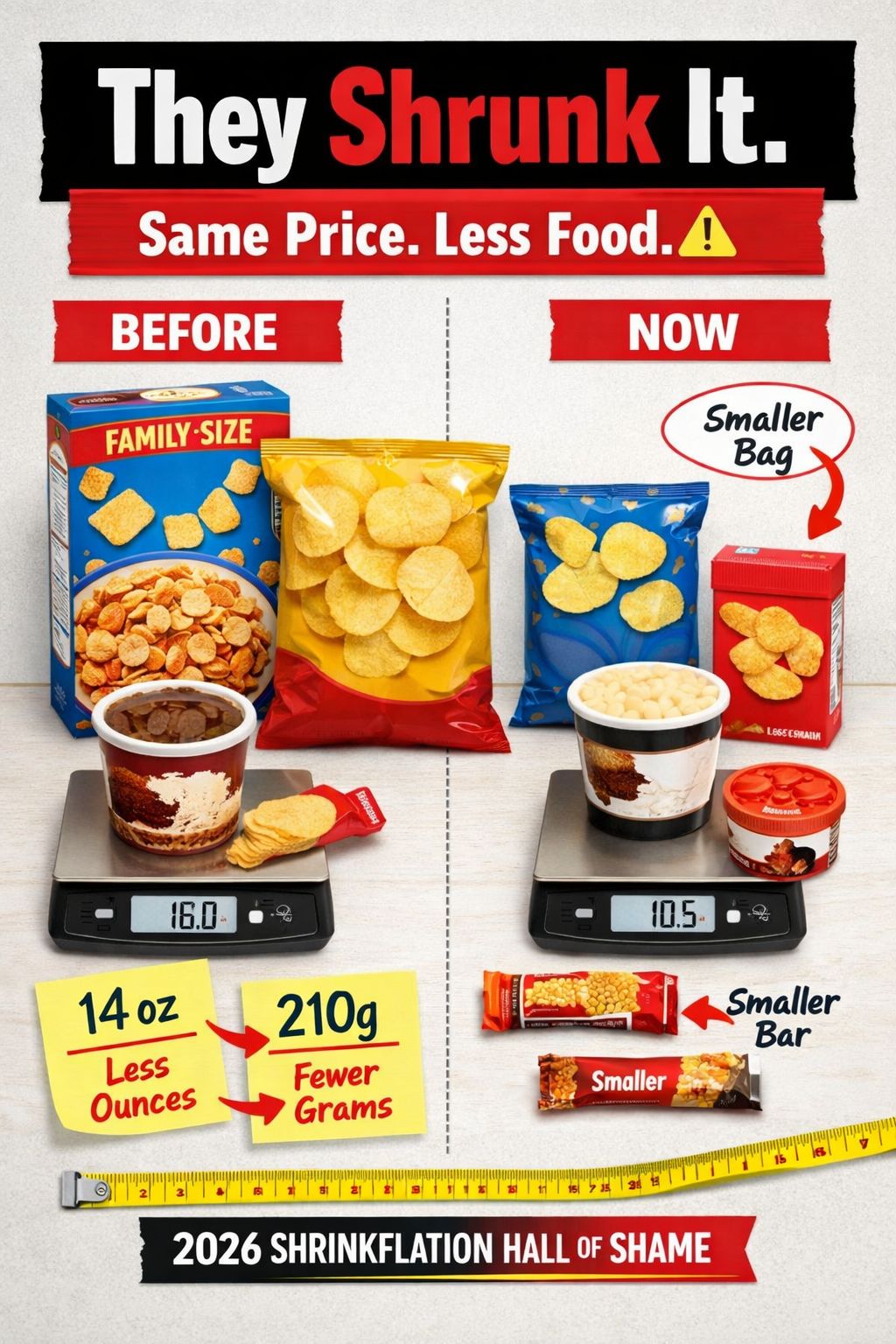
Quick Answer
Your favorite products are shrinking faster than ever, with 33% of all grocery items affected by shrinkflation in 2025. Major brands like Doritos, Charmin, and Crest have reduced package sizes by 5-20% while maintaining or raising prices. This hidden tax costs American families hundreds of dollars annually without the transparency of a traditional price increase.
That bag of chips isn’t getting emptier by accident.
Companies are deliberately reducing product sizes while keeping prices identical.
Welcome to the world of shrinkflation, where your dollar buys less every single shopping trip.
If you’ve noticed your paper towels running out faster or your cereal box feeling suspiciously light, you’re experiencing a calculated business strategy.
Shrinkflation affects everything from breakfast cereals to dinner staples to toilet paper.
In 2025, this practice accelerated dramatically across American grocery stores.

Real examples of shrinkflation: Products getting smaller while prices stay the same or increase
Research shows approximately 33% of all grocery items have been downsized.
The average product shrunk by a staggering 14.8% among major national brands.
This investigative report from The Original Recipe exposes the brands and products that betrayed consumer trust.
We’ve compiled hard data, company statements, and expert analysis to help you fight back.
Summary: Key Findings
- 33% of grocery products experienced shrinkflation in 2025, with the average reduction being 14.8% across major brands
- Shrinkflation accounts for 10.3% of overall grocery price inflation, making it a hidden driver of rising food costs
- 75% of Americans have noticed shrinkflation, and 48% have abandoned brands after discovering downsized products
- Breakfast cereals, snacks, and paper products lead the shrinkflation hall of shame, with some products shrinking by over 20%
Table of Contents
- What Is Shrinkflation and Why Does It Matter?
- How Bad Is Shrinkflation in 2026?
- Which Breakfast Cereals Shrunk the Most?
- Are Chips and Cookies Getting Smaller?
- What Happened to Frozen Food Portions?
- Did Beverage Sizes Change?
- Are Pantry Staples Like Pasta and Coffee Affected?
- How Much Have Cleaning Products Shrunk?
- Why Are Paper Towels and Toilet Paper Getting Smaller?
- Which Personal Care Items Got Downsized?
- How Can I Fight Back Against Shrinkflation?
- Frequently Asked Questions
What Is Shrinkflation and Why Does It Matter?
Shrinkflation happens when manufacturers reduce product quantity while maintaining prices.
It’s essentially a disguised price increase that avoids consumer sticker shock.
Companies bet you won’t notice five fewer chips in your Doritos bag.
They’re right most of the time.
Research reveals that consumers focus primarily on shelf prices, not net weights.
A 2025 survey found 75% of Americans have observed shrinkflation affecting their purchases.
This awareness hasn’t stopped the practice from spreading.
Edgar Dworsky, a consumer advocate tracking downsizing for decades, explains the corporate strategy clearly.
Shrinkflation differs from regular inflation because it lacks transparency.
When prices rise openly, consumers can make informed decisions.
Shrinkflation sneaks past your awareness, eroding purchasing power silently.
The practice accelerated during the 2020-2025 inflationary period.
Companies faced rising costs for raw materials, transportation, and labor.
Rather than raise prices directly, they chose stealth reductions.
This matters because shrinkflation compounds over time.
A 10% reduction this year plus another 8% next year means significantly less product.
Your household budget takes repeated invisible hits.
President Joe Biden publicly called shrinkflation a “rip off” in 2024.
U.S. Senators responded by co-sponsoring the Shrinkflation Prevention Act.
The proposed legislation would classify deceptive downsizing as illegal.
However, no federal law currently requires companies to announce size reductions.
They only must display accurate net weights on packaging.
Warning: The “New Look” Trap
Companies typically redesign packaging when implementing shrinkflation.
Labels saying “New Look!” or “Improved Formula!” often disguise quantity reductions.
Always check net weights when you see package redesigns.
How Bad Is Shrinkflation in 2026?
The scale of shrinkflation in 2025-2026 represents an unprecedented consumer challenge.
Market analysis reveals this isn’t isolated to a few products.
It’s a systematic restructuring of consumer goods across every category.
Approximately 33% of all grocery items experienced downsizing in 2025.
Among selected national brands, the average size reduction reached 14.8%.
This means you’re getting nearly 15% less product for the same money.
The snack category shows particularly aggressive shrinkflation.
Nearly 9.8% of snack price inflation came from downsizing, not actual price increases.
When you buy your favorite cookies or chips, almost 10% of the “price increase” is hidden size reduction.
Consumer budget erosion accumulates across shopping lists.
Analysis shows typical households receive 8-12% less product volume for the same expenditure.
For a family spending $200 weekly on groceries, that’s $16-24 in lost value.
Over a year, this hidden tax costs families between $832 and $1,248.
The food industry faces unprecedented pressures from multiple directions.
Rising ingredient costs, supply chain disruptions, and changing consumer habits all contribute.
Major corporations like Procter & Gamble defend these changes publicly.
A P&G representative stated they’ve made “product improvements” justifying fewer paper towel sheets.
Frito-Lay claimed they “took just a little bit out” to maintain price points.
These corporate statements frame shrinkflation as consumer-friendly.
Independent experts disagree strongly.
Economic analysts predict these smaller sizes represent permanent changes.
Even when inflation subsides, companies rarely restore original package sizes.
The trend has evolved from temporary cost management to permanent business strategy.
Critical Alert: Hidden Tax on Your Wallet
Shrinkflation costs the average American household $800-1,200 annually.
This hidden expense never appears on receipts or price tags.
You simply get less product without realizing it.
Which Breakfast Cereals Shrunk the Most?
Breakfast cereals lead the shrinkflation hall of shame.
Major brands have reduced box weights while maintaining identical packaging dimensions.
This makes detection nearly impossible for casual shoppers.
The family size cereal box has become shrinkflation’s poster child.
| Brand | Product | Old Size | New Size | Decrease % |
|---|---|---|---|---|
| Post | Honey Bunches of Oats (Family) | 23 oz | 18 oz | 21.7% |
| Kellogg’s | Frosted Flakes (Family) | 24 oz | 21.7 oz | 9.6% |
| General Mills | Family Size Cereals | 19.3 oz | 18.1 oz | 6.2% |
Post’s Honey Bunches of Oats suffered the most dramatic reduction.
The family size dropped from 23 ounces to just 18 ounces.
That’s a devastating 21.7% reduction in product.
The price dropped by only ten cents.
Simultaneously, Post introduced a “Giant Size” at the original family size price.
This pricing strategy forces consumers to pay more for what was previously standard.
Kellogg’s Frosted Flakes family size shrank from 24 to 21.7 ounces.
This 9.6% reduction led to a reported 40% increase in per-ounce pricing.
General Mills implemented similar changes across multiple cereal brands.
Their family size boxes lost 1.2 ounces, a 6.2% decrease.
The boxes themselves remained identical in height, width, and depth.
Manufacturers use clever packaging tricks to disguise these reductions.
They increase the air space inside boxes while maintaining external dimensions.
Your eye sees the same box size on the shelf.
Only the fine print reveals the truth.
Pro Tip: The Breakfast Math
Always calculate the cost per ounce for cereal purchases.
Family size boxes aren’t always the best value anymore.
Sometimes buying multiple regular boxes costs less per ounce.
Check your store’s shelf tags for unit pricing comparisons.
These breakfast reductions hit families especially hard.
Many households serve cereal daily for quick breakfast ideas.
A 20% reduction means boxes run out a full day earlier each week.
Over a month, that’s four extra boxes families must purchase.
The cumulative cost adds up to hundreds annually.

The shrinking cereal box: What used to be “regular” is now “family size,” and new regular boxes are significantly smaller
Are Chips and Cookies Getting Smaller?
The snack aisle represents shrinkflation ground zero.
Chip bags, cookie packages, and candy bars have all become lighter.
Frito-Lay’s Doritos downsizing sparked national outrage in 2024.
| Brand | Product | Old Size | New Size | Decrease % |
|---|---|---|---|---|
| Frito-Lay | Doritos | 9.75 oz | 9.25 oz | 5.1% |
| Clif Bar | Multipacks | 12 bars | 10 bars | 16.7% |
| Major Cookie Brands | Packaged Cookies | 15 oz | 13.7 oz | 8.7% |
| Chocolate Brands | Standard Bars | 1.55 oz | 1.48 oz | 4.5% |
Doritos bags shrank from 9.75 to 9.25 ounces.
This seemingly small 5.1% reduction equals about five fewer chips per bag.

Doritos shrinkflation in action: The newer bag (right) contains half an ounce less than the previous version
Frito-Lay confirmed the change responded directly to inflation pressures.
Consumer reaction was swift and negative.
Social media erupted with complaints about “air bags” containing minimal chips.
The r/shrinkflation subreddit gained hundreds of thousands of members documenting examples.
Cookie manufacturers implemented similar stealth reductions.
Popular brands dropped from 15 to 13.7 ounces.
That’s an 8.7% decrease in your favorite chocolate chip cookies.
Package dimensions remained unchanged.
Companies simply included fewer cookies per package.
Clif Bar multipacks delivered one of the most brazen examples.
The count dropped from 12 bars to just 10 bars.
This 16.7% reduction meant losing two full bars.
The price stayed identical.
Chocolate bars across major brands shrank from 1.55 to 1.48 ounces.
A 4.5% reduction might seem minor.
However, these bars have steadily shrunk over decades.
Candy bars in the 1980s weighed significantly more than today’s versions.
The compound effect represents massive value erosion over time.
This statistic reveals a shocking truth about snack pricing.
Nearly one-tenth of price increases aren’t actually price increases.
They’re hidden quantity reductions.
When you’re buying ingredients for dessert recipes or peanut butter cookies, factor in these reductions.
Recipe yields may differ if your packaged ingredients contain less product.

Candy bar weight changes since 2014: Nearly every major brand has reduced product size
What Happened to Frozen Food Portions?
The freezer aisle hasn’t escaped shrinkflation’s reach.
Frozen entrées, ice cream, and prepared meals have all shrunk substantially.
These reductions affect portion sizes consumers depend on for meal planning.
| Product Category | Old Size | New Size | Decrease % |
|---|---|---|---|
| Ice Cream Cartons | 1.75 quarts (56 fl oz) | 1.5 quarts (48 fl oz) | 14.3% |
| Haagen-Dazs “Pints” | 16 oz | 14 oz | 12.5% |
| Frozen Entrées | Varies | Varies | 8-12% |
Ice cream represents one of the most deceptive shrinkflation categories.
Major brands reduced standard cartons from 1.75 quarts to 1.5 quarts.
This 14.3% reduction eliminated 8 full fluid ounces.
Manufacturers often announce a “new shape” or “easier to scoop” design.
The real change is simply less ice cream.
Haagen-Dazs shrank their famous “pint” containers from 16 to 14 ounces.
A true pint measures exactly 16 fluid ounces by definition.
Calling a 14-ounce container a “pint” stretches consumer trust.
The 12.5% reduction costs you two full ounces per purchase.
Frozen entrées across major brands decreased by 8-12% on average.
Single-serving meals now contain less protein and fewer calories.
This affects nutritional planning for health-conscious consumers.
A meal advertised as containing 20 grams of protein might now have only 18 grams.
These reductions impact portion satisfaction.
Consumers report frozen meals no longer feel filling.
Many end up supplementing with side dishes, increasing total meal cost.
When planning dinner ideas with frozen components, account for smaller portions.
You might need additional items to complete satisfying meals.

Ice cream shrinkflation: Containers have gotten significantly smaller while maintaining similar packaging appearance
Warning: The “New Shape” Deception
Ice cream makers frequently introduce “new shapes” during shrinkflation.
They claim improved scooping or better storage.
The real reason is hiding volume reductions.
Always check fluid ounces, not just the container appearance.
Did Beverage Sizes Change?
Beverage containers have also experienced significant downsizing.
Juice jugs, water bottle packs, and soda bottles have all shrunk.
| Product | Old Size | New Size | Decrease % |
|---|---|---|---|
| Coca-Cola PET Bottles | 500 ml | 375 ml | 25% |
| Bottled Water Multipacks | 24 bottles | 20 bottles | 16.7% |
| Juice Containers | 64 fl oz | 59 fl oz | 7.8% |
Coca-Cola implemented some of the most dramatic beverage reductions.
In certain regions, standard bottles dropped from 500ml to 375ml.
This 25% reduction represents a quarter of the product disappearing.
Coca-Cola framed these changes as sustainability initiatives.
They emphasized “lightweighting” bottles to reduce plastic usage.
However, consumers in affected markets lost significant product volume.
The environmental messaging conveniently overlooks the shrinkflation aspect.
Bottled water multipacks shrank from 24 to 20 bottles.
The 16.7% reduction eliminates four full bottles per package.
Outer packaging often maintains similar dimensions.
The plastic wrap and cardboard create an illusion of unchanged size.
Only opening the package reveals the missing bottles.
Juice containers transitioned from the standard half-gallon (64 oz) to 59 ounces.
This 7.8% reduction creates non-standard sizes.
Non-standard sizing deliberately complicates price comparisons.
Consumers struggle to calculate value when containers measure 59, 62, or 64 ounces.
This confusion benefits manufacturers by obscuring true cost differences.

Gatorade shrinkflation: Bottles dropped from 32 ounces to 28 ounces while maintaining similar bottle design
Are Pantry Staples Like Pasta and Coffee Affected?
Even basic pantry items haven’t escaped shrinkflation.
Pasta boxes and coffee packages have undergone significant reductions.
| Product | Old Size | New Size | Decrease % |
|---|---|---|---|
| Pasta Boxes | 16 oz (1 lb) | 14 oz | 12.5% |
| Ground Coffee | 12 oz | 10.5 oz | 12.5% |
The traditional one-pound box of pasta is becoming rare.
Major brands now sell 14-ounce boxes as standard.
This 12.5% reduction impacts recipe yields.
Classic pasta recipes call for one pound of pasta.
Home cooks now need to buy additional packages or adjust recipes.
Popular dishes like lasagna and mac and cheese require recalculation.
Ground coffee packages shrank from 12 to 10.5 ounces.
Another 12.5% reduction that affects daily routines.
Coffee drinkers must purchase more frequently.
The psychological impact of packages running out faster creates shopping stress.

Pantry staples affected by shrinkflation: From pasta to coffee, essential items are getting smaller
These pantry staples represent household essentials.
Families rely on them for chicken recipes, soup recipes, and daily meals.
Shrinkflation here directly affects food security perceptions.
Pro Tip: Recipe Adjustments
When following traditional recipes calling for “1 pound of pasta,” remember modern boxes contain only 14 ounces.
Either buy two boxes or reduce other ingredients proportionally.
Many crockpot recipes and chicken noodle soup recipes need similar adjustments.
How Much Have Cleaning Products Shrunk?
Household cleaning supplies have experienced substantial shrinkflation.
Detergents, dish soap, and wipes all contain less product.
| Product | Old Size | New Size | Decrease % |
|---|---|---|---|
| Dish Soap | 24 oz | 21.6 oz | 10.0% |
| Cascade Pods | 62 pods | 57 pods | 8.1% |
| Laundry Detergent | 100 fl oz | 92 fl oz | 8.0% |
| Disinfecting Wipes | 75 wipes | 70 wipes | 6.7% |
Dish soap bottles shrank from 24 to 21.6 ounces.
A 10% reduction means bottles run out noticeably faster.
This particularly impacts households doing frequent dishwashing.
Procter & Gamble’s Cascade dishwashing pods dropped from 62 to 57 count.
The 8.1% reduction came with a simultaneous price increase.
Reports show the smaller package sold for $22.68 compared to the previous $26.12.
This represents double-dipping: shrinkflation plus direct price increases.
Consumers faced reduced quantity and higher per-pod costs simultaneously.
Laundry detergent bottles lost 8 ounces, from 100 to 92 fluid ounces.
This 8% reduction eliminates several full loads of laundry per bottle.
Disinfecting wipes containers dropped from 75 to 70 wipes.
A 6.7% reduction that affects household cleaning routines.
These products relate to essential household maintenance.
Families can’t simply stop buying cleaning supplies.
Shrinkflation here represents a particularly insidious tax on household budgets.
Critical Alert: Double Shrinkflation
Some P&G products experienced both size reductions AND price increases.
Cascade pods shrank 8.1% while prices rose.
This double-hit represents the worst form of consumer exploitation.
Always compare both unit prices and package sizes.
Why Are Paper Towels and Toilet Paper Getting Smaller?
Paper products represent shrinkflation’s most infamous category.
Toilet paper and paper towels have shrunk in multiple dimensions.
Sheet counts decrease, individual sheets get smaller, and paper gets thinner.
| Product | Old Size | New Size | Decrease % |
|---|---|---|---|
| Bounty Mega Roll | 135 sheets | 123 sheets | 8.9% |
| Charmin Mega Roll (18-count) | 264 sheets/roll | 244 sheets/roll | 7.6% |
Procter & Gamble’s Bounty paper towels shrank from 135 to 123 sheets per Mega Roll.
This 8.9% reduction eliminates 12 full sheets per roll.
P&G justified changes by claiming “improvements to the paper substrate.”
Consumers remain unconvinced by these claims.
A class action lawsuit alleges P&G short-changes consumers on paper towels.
Charmin Ultra Soft Mega Rolls decreased from 264 to 244 sheets per roll.
The 7.6% reduction equals losing nearly 1.5 entire rolls from an 18-count package.
Additionally, Charmin sheets have narrowed over the years.
Sheet width decreased from 4.5 inches to 3.92 inches.
This represents another hidden reduction in total paper area.
When you multiply fewer sheets times narrower width, total paper area drops dramatically.
The Hustle investigated why toilet paper keeps shrinking.
Their analysis revealed multiple simultaneous reduction tactics.
Paper gets thinner, sheets get smaller, and roll counts decrease.
Consumers face triple shrinkflation in a single product category.
Reddit’s r/shrinkflation community documents countless paper product examples.
Users post side-by-side comparisons showing shocking size differences.
The community consensus: paper products represent the worst shrinkflation category.

Charmin toilet paper shrinkflation: Fewer sheets per roll and narrower sheet width means significantly less product

Bounty paper towels: Mega Rolls dropped from 135 to 123 sheets, an 8.9% reduction
Warning: The Mega/Super/Giant Roll Confusion
Paper product labels use confusing terminology like “Mega” and “Super” rolls.
A “Mega Roll” today contains fewer sheets than a regular roll from five years ago.
Manufacturers constantly redefine these terms downward.
Ignore marketing labels and focus solely on sheet count per roll.
Which Personal Care Items Got Downsized?
Personal care products have experienced some of the most dramatic shrinkflation.
Toothpaste, shampoo, and soap bars all shrank substantially.
| Product | Old Size | New Size | Decrease % |
|---|---|---|---|
| Crest 3D White | 4.1 oz | 3.3 oz | 19.5% |
| Bar Soap Multipacks | 8 bars | 6 bars | 25.0% |
| Shampoo/Conditioner | 12.6 fl oz | 11.8 fl oz | 6.3% |
Crest 3D White toothpaste suffered a devastating reduction.
Tubes shrank from 4.1 to 3.3 ounces.
This 19.5% reduction approaches one-fifth of the product disappearing.
Procter & Gamble implemented this change across their toothpaste line.
Consumers must replace toothpaste significantly more frequently.
Bar soap multipacks experienced perhaps the most extreme shrinkflation.
Package counts dropped from 8 bars to just 6 bars.
A 25% reduction means consumers lose two full bars per package.
This quarter-product elimination represents brazen downsizing.
Shampoo and conditioner bottles lost 0.8 fluid ounces.
The 6.3% reduction may seem small.
However, these are products used daily by every household member.
Small percentage reductions compound quickly with frequent purchases.
Personal care shrinkflation particularly impacts budget-conscious families.
These items represent non-negotiable expenses.
Families can’t simply stop buying toothpaste or soap.
Shrinkflation here taxes the most vulnerable consumers.

Toblerone’s notorious shrinkflation: Wider gaps between chocolate peaks reduced product weight while maintaining package size

Cadbury shrinkflation: The chocolate bar literally had its corners cut, reducing size by over 8%
How Can I Fight Back Against Shrinkflation?
You’re not powerless against shrinkflation.
Smart shopping strategies can protect your household budget.
Knowledge and vigilance represent your best weapons.
Master the Unit Price
Unit pricing provides your most powerful tool.
Ignore shelf prices completely.
Focus exclusively on price per ounce, pound, sheet, or count.
Shelf tags display this critical information.
Unit prices enable true apples-to-apples comparisons.
A seemingly cheaper package might cost more per ounce.
Always calculate value using unit pricing.
Pro Tip: The Unit Price Calculator
If shelf tags lack unit pricing, calculate it yourself.
Divide the total price by the net weight or count.
Compare this number across brands and package sizes.
The lowest unit price represents the best value.
Become a Product Historian
Document your purchases systematically.
Take quick photos of product labels showing net weights.
Store these images in a dedicated phone folder.
Compare current packages against your historical photos.
This practice reveals shrinkflation immediately.
You’ll catch size reductions manufacturers hoped to hide.
Read Fine Print Religiously
Always check net weight, fluid ounces, or item counts.
This information appears on the front label.
Never rely on package physical dimensions.
Boxes and bags are deliberately designed to deceive.
Increased air space masks reduced contents.
Only the printed weight reveals truth.
Suspect “New Look” Marketing
Package redesigns signal prime shrinkflation opportunities.
Treat “New and Improved!” labels with suspicion.
“Same Great Taste, New Look!” often means less product.
Companies redesign packaging specifically to obscure size reductions.
Double-check weights whenever you see redesigned packaging.
Warning Signs of Shrinkflation
“New Look!” or “Improved!” labels on packaging
Package redesigns with similar external dimensions
Bottles or boxes with different shapes or depths
Products that seem to run out faster than before
Consider Store Brands
Private label brands typically implement shrinkflation slower.
Store brands often maintain more stable package sizes.
They frequently offer better per-unit value.
Compare unit prices between national and store brands.
You might find significant savings.
Quality differences have narrowed considerably in recent years.
Report Deceptive Practices
Consumer complaints drive regulatory action.
File reports with the Federal Trade Commission.
Contact your state consumer protection office.
Document specific examples with photos and receipts.
Widespread consumer reporting could trigger investigations.
Vote With Your Wallet
Remember that 48% of shoppers have abandoned brands after discovering shrinkflation.
Your purchasing decisions send powerful messages.
Switch to brands that maintain honest sizing.
Leave negative reviews mentioning specific size reductions.
Share your findings on social media.
Companies monitor consumer sentiment closely.
Sustained negative feedback can reverse corporate policies.
Action Plan: Your 7-Day Shrinkflation Defense
Day 1: Photograph net weights on your current household staples
Day 2-3: Compare unit prices on your next shopping trip, not shelf prices
Day 4: Try three store brand alternatives to your usual national brands
Day 5: Join online communities like r/shrinkflation to stay informed
Day 6: File a report about deceptive packaging with the FTC
Day 7: Calculate your monthly savings from smarter shopping
Frequently Asked Questions About Shrinkflation
Shrinkflation happens when companies reduce product sizes while keeping prices the same or raising them.
It’s essentially a hidden price increase that erodes your purchasing power.
Research shows 33% of all grocery items have been affected.
You’re paying the same amount for significantly less product.
Breakfast cereals, snack foods, and paper products lead the pack.
Cereals have seen reductions of up to 21.7% in some cases.
Paper towel sheets have decreased by nearly 9%.
Personal care items like toothpaste have shrunk by almost 20%.
Always check the unit price on shelf tags.
Take photos of product labels showing net weight for future comparison.
Be especially suspicious of packages labeled “New Look!” or “Improved!”
These marketing phrases often hide size reductions.
Currently, no federal law specifically addresses shrinkflation.
However, the Shrinkflation Prevention Act has been proposed.
This legislation would classify deceptive downsizing as illegal.
Companies must display accurate net weights but needn’t announce size decreases.
Experts predict these smaller sizes are permanent.
Even if inflation subsides, companies rarely restore original package sizes.
The trend has evolved from temporary cost-saving to permanent strategy.
History shows once sizes shrink, they stay shrunk.
Regular price increases are transparent.
The price tag goes up while you get the same amount.
Shrinkflation is sneaky.
The price stays the same (or increases), but you get less product.
It’s designed to avoid sticker shock while increasing company profits.
Store brands often provide better value.
They’re typically slower to implement shrinkflation.
Private label products usually maintain more stable package sizes.
Compare unit prices to determine if store brands offer better deals.
The average American household loses $800-1,200 annually to shrinkflation.
This represents 8-12% less product volume for the same spending.
For a family spending $200 weekly on groceries, that’s $16-24 lost per week.
The hidden tax accumulates without appearing on receipts.
The Future of Shrinkflation: What to Expect in 2026-2027
Shrinkflation shows no signs of slowing.
Industry analysts predict continued downsizing throughout 2026.
Companies have normalized this practice.
What began as emergency cost management has become standard operating procedure.
Several trends will likely accelerate:
First, multi-dimensional shrinkflation will increase.
Products won’t just get smaller.
They’ll also get thinner, narrower, and contain less dense formulations.
Paper products exemplify this triple-threat approach.
Second, confusing package sizing will proliferate.
Non-standard measurements make price comparisons nearly impossible.
Expect more products in odd sizes like 13.7 ounces or 59 fluid ounces.
Third, premium “original size” options will emerge.
Companies will offer larger “heritage” packages at significantly higher prices.
This creates a two-tier market: shrinkflated products and premium-priced “normal” sizes.
Fourth, changing consumer habits will drive further reductions.
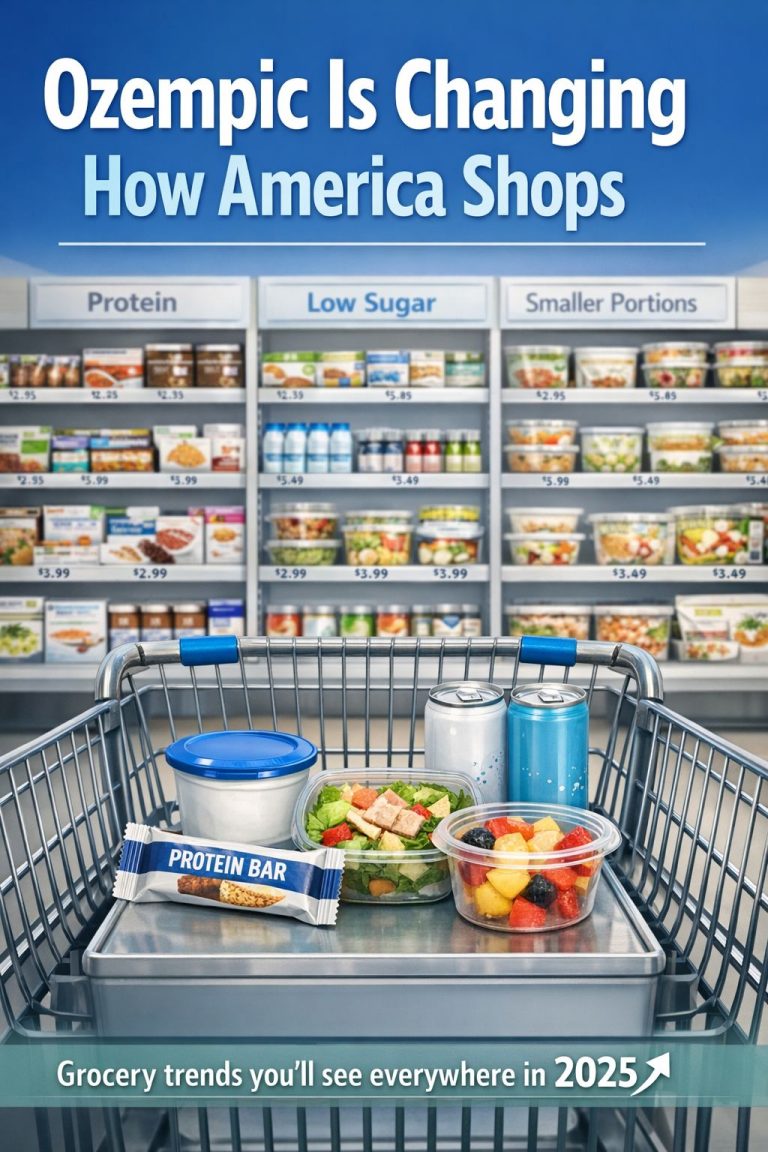
As appetite suppressants and weight loss medications gain popularity, food companies adapt portion sizes.
They’ll frame shrinkflation as “health-conscious portions.”
Political pressure may eventually curb some practices.
The Shrinkflation Prevention Act could pass in 2026.
This would require companies to clearly disclose size reductions.
However, enforcement remains uncertain.
2026 Prediction: Shrinkflation Goes Digital
Watch for “smart packaging” that adjusts serving sizes algorithmically.
Companies may introduce subscription models with variable portion sizes.
Digital platforms enable even more sophisticated shrinkflation tactics.
Stay vigilant as shopping moves increasingly online.
Consumer resistance represents the strongest counterforce.
As awareness grows, brand loyalty weakens.
The 48% abandonment rate will likely increase.
Companies ignoring consumer anger risk long-term market share loss.
Your informed choices today shape tomorrow’s marketplace.
Conclusion: Taking Control of Your Shopping Budget in 2026
Shrinkflation represents one of the most insidious consumer challenges today.
It exploits psychological blind spots and shopping habits.
But knowledge defeats deception.
You now understand which products shrank most dramatically.
You know which brands betrayed consumer trust.
More importantly, you have tools to fight back.
Start implementing the unit price strategy immediately.
Document your current products today.
Compare sizes on your next shopping trip.
Share this information with friends and family.
Collective awareness creates market pressure.
When millions of consumers make informed choices, companies must respond.
Your wallet thanks you for reading this far.
Your future self thanks you for implementing these strategies.
Remember: every dollar you save on groceries can go toward things that matter.
Maybe it’s extra ingredients for trying that sourdough bread recipe you’ve been eyeing.
Perhaps it’s quality olive oil for your fried rice or pizza dough.
Maybe it’s simply more financial security.
Whatever your goals, shrinkflation shouldn’t steal your money silently.
Your Immediate Action Checklist
This Week: Photograph net weights on 10 products you buy regularly
Next Shopping Trip: Check unit prices before buying, compare against your photos
This Month: Try store brand alternatives for your top 5 most expensive items
Ongoing: Report deceptive packaging to the FTC and share findings online
Share: Send this article to three friends who’d benefit from this information
The shrinkflation hall of shame grows longer each month.
But informed consumers represent the strongest counterforce.
Together, we can demand transparency and fair value.
Start protecting your budget today.