
8 Low Glycemic Chicken Recipes for Every Night of the Week


Chicken has essentially no carbohydrate on its own, so it does not carry a glycemic index number. What matters is everything you build around it, the sauce, the sides, and the wrap you serve it in.
Here are 8 chicken recipes built with that in mind, using bright marinades, whole grain wraps, and vegetable-forward sides to keep the overall meal low glycemic.
These are general meal ideas. Always follow your healthcare provider’s guidance for your specific needs.
Why Chicken Is a Reliable Low Glycemic Base
Since chicken itself carries almost no carbohydrate, the glycemic impact of a chicken dinner comes down to what surrounds it. A glaze heavy in sugar, a side of white rice, or a refined bun can all push an otherwise simple chicken dish higher on the scale.
The recipes below lean on whole grain wraps, fruit used sparingly for flavor rather than as the main event, and vegetable-heavy sides to keep the full plate low glycemic, not just the chicken itself.
Quick Tips for Lower Glycemic Chicken Dinners
- Choose whole wheat or collard green wraps over white flour tortillas or buns.
- Use fruit in marinades and salsas sparingly, as an accent rather than the main flavor.
- Pair chicken with a full serving of non-starchy vegetables.
- Thighs and breast both work well, choose based on preference rather than any glycemic difference.
1. Stuffed Chicken with Dates, Spinach, and Ricotta

Chicken breast butterflied open and stuffed with a savory-sweet filling of spinach, ricotta, and chopped dates, then roasted until the outside turns golden. It looks like a dish from a nice restaurant, but the actual hands-on time is fairly short.
Why it works: A generous chicken breast serving delivers plenty of protein, and the small amount of natural sweetness from the dates keeps this dish’s glycemic impact low.
Best for a dinner party centerpiece
2. Grilled Honey Lime Chicken
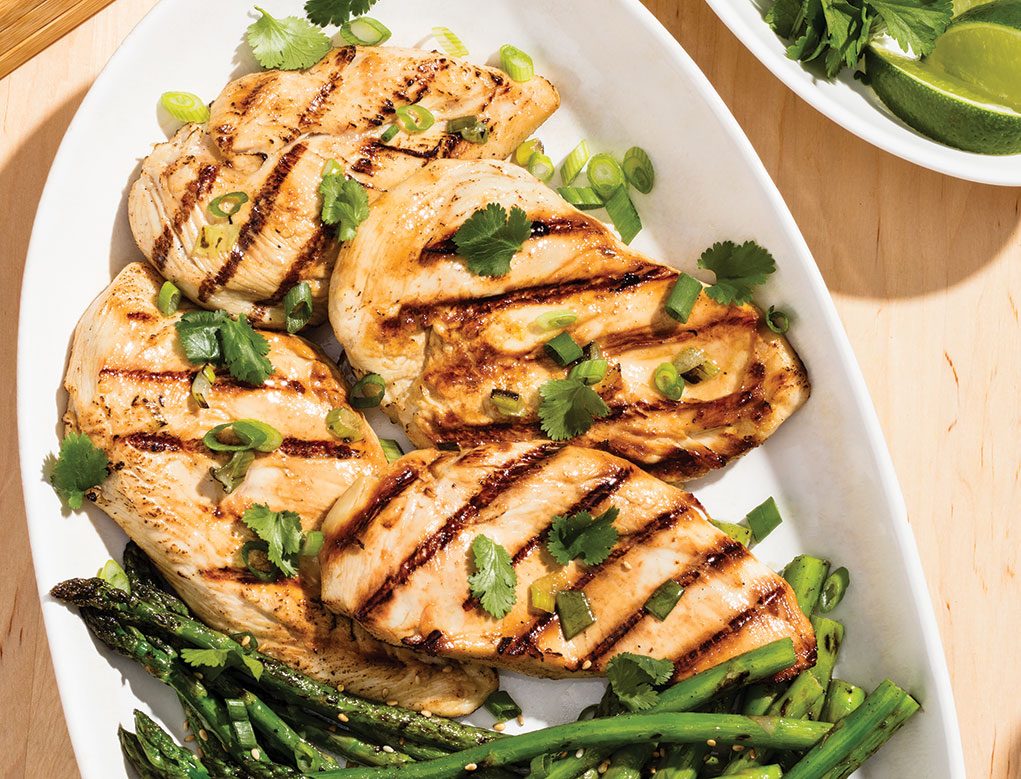
Chicken thighs marinated in a bright, citrusy honey lime glaze, then grilled until the edges char slightly. The marinade does double duty as a light sauce once the chicken comes off the grill.
Why it works: The honey in the marinade is used sparingly, purely for flavor, so the overall glycemic load of the finished dish stays modest.
Best for grilling season
3. Sheet Pan Chicken with Brussels Sprouts and Apple
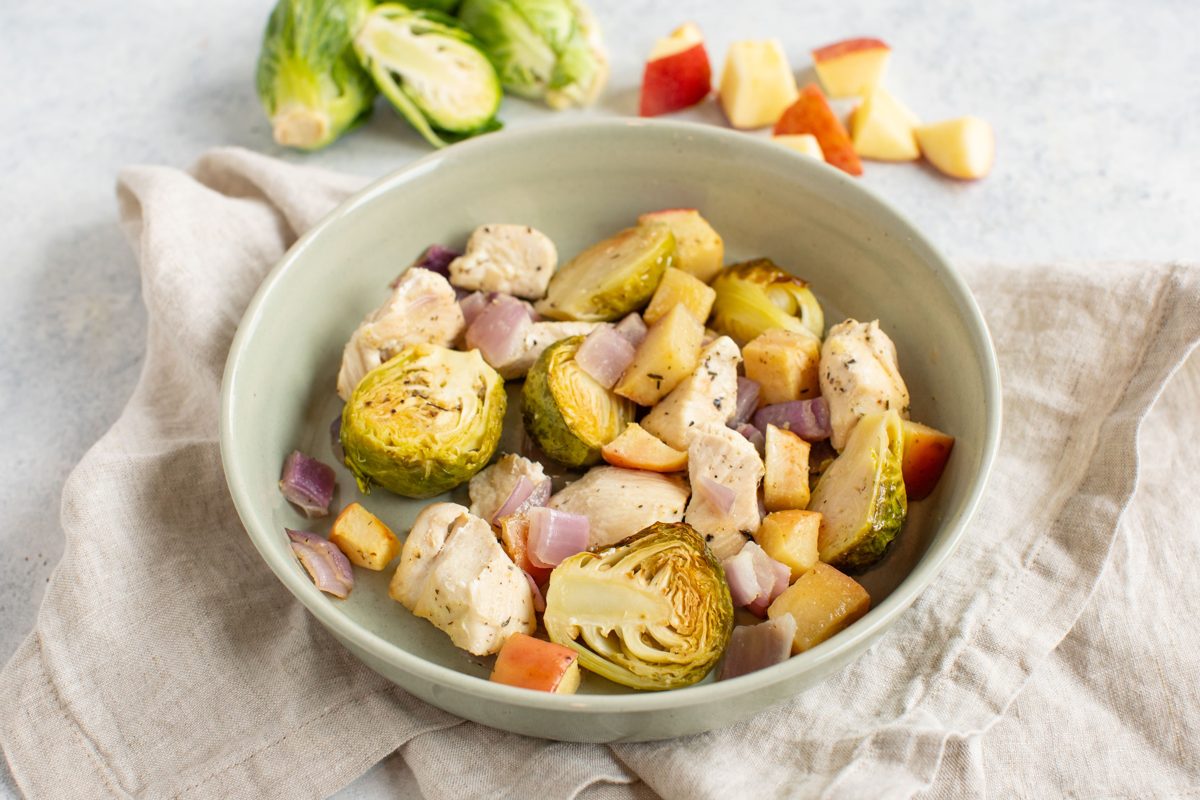
Roasted chicken thighs with Brussels sprouts and apple slices, all cooked together on one pan for easy cleanup. The apple caramelizes slightly in the oven, adding a subtle sweetness that pairs surprisingly well with the savory chicken.
Why it works: Whole apple keeps its fiber, and Brussels sprouts add volume without much carbohydrate, keeping the whole sheet pan meal low glycemic.
Best for an easy cleanup weeknight dinner
4. Pesto Chicken Wrap
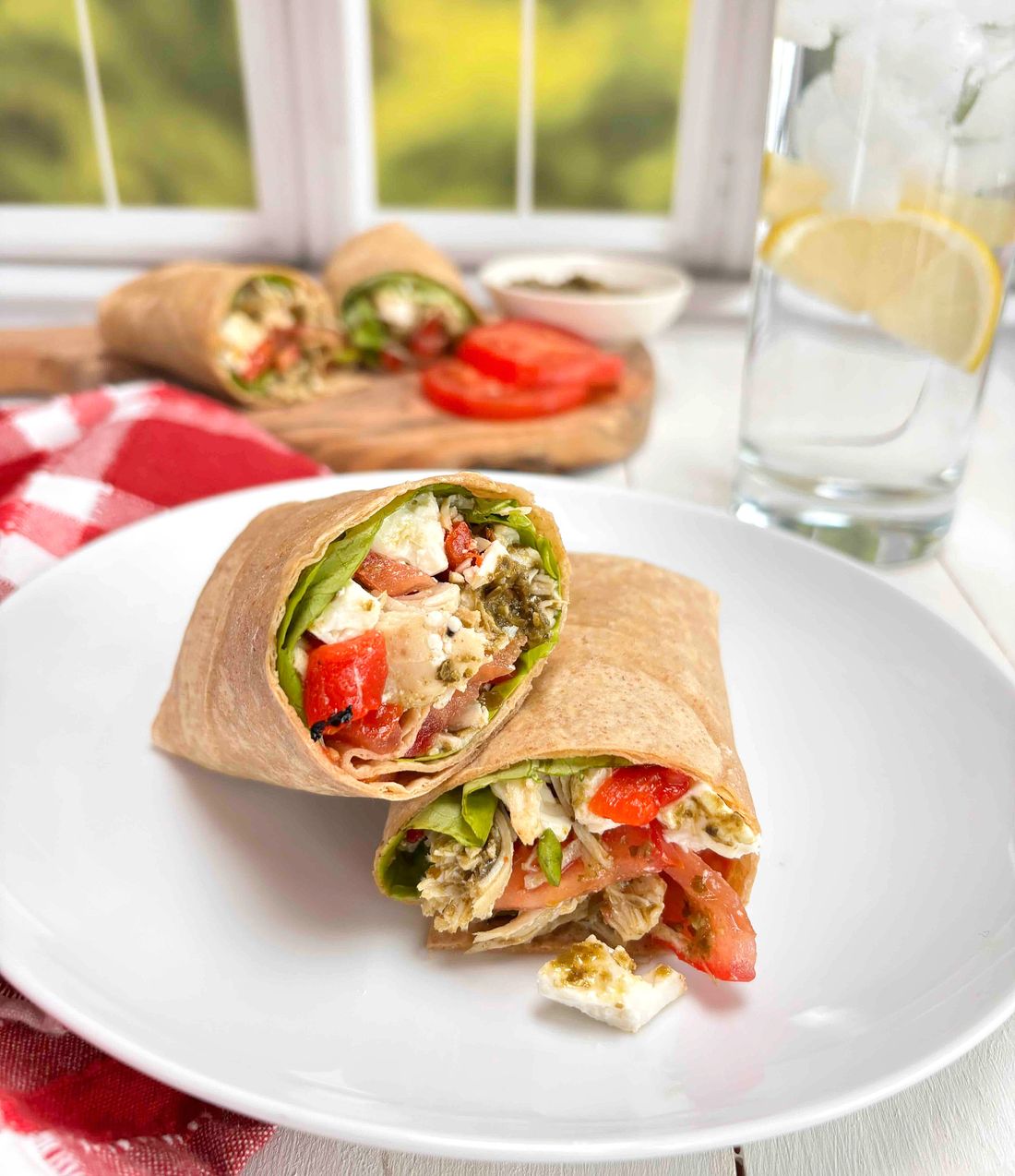
Grilled chicken, fresh basil pesto, and greens rolled into a whole wheat tortilla. A fast lunch that still tastes like it took real effort, thanks to the pesto doing most of the flavor work.
Why it works: Lean chicken and a whole wheat wrap keep this filling without a heavy refined carb load, and the pesto’s healthy fat slows digestion further.
Best for a 10 minute lunch
5. Chicken Shawarma Wraps
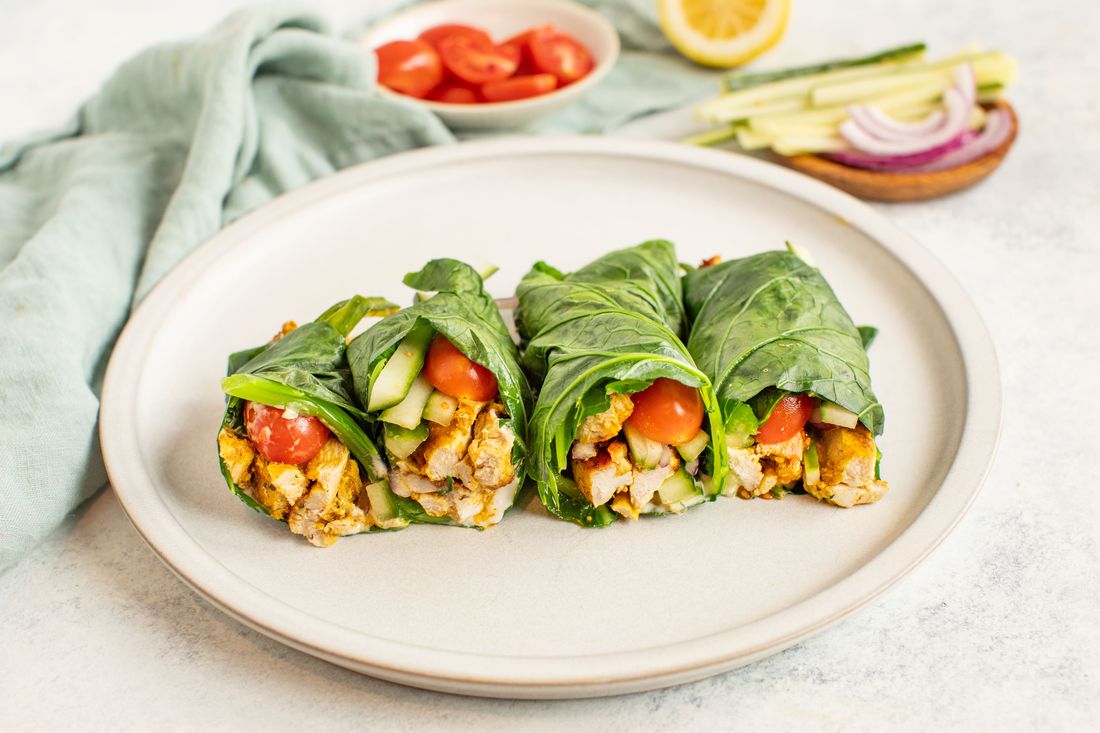
Spiced grilled chicken rolled into a whole wheat wrap with crunchy vegetables and a cool yogurt sauce. The spice blend does a lot of heavy lifting here, making this taste far more complex than the short ingredient list suggests.
Why it works: Lean chicken paired with a whole wheat wrap and yogurt sauce keeps the meal’s overall glycemic load modest while still feeling indulgent.
Best for a weeknight dinner that feels like takeout
6. Chicken Shawarma Collard Wraps
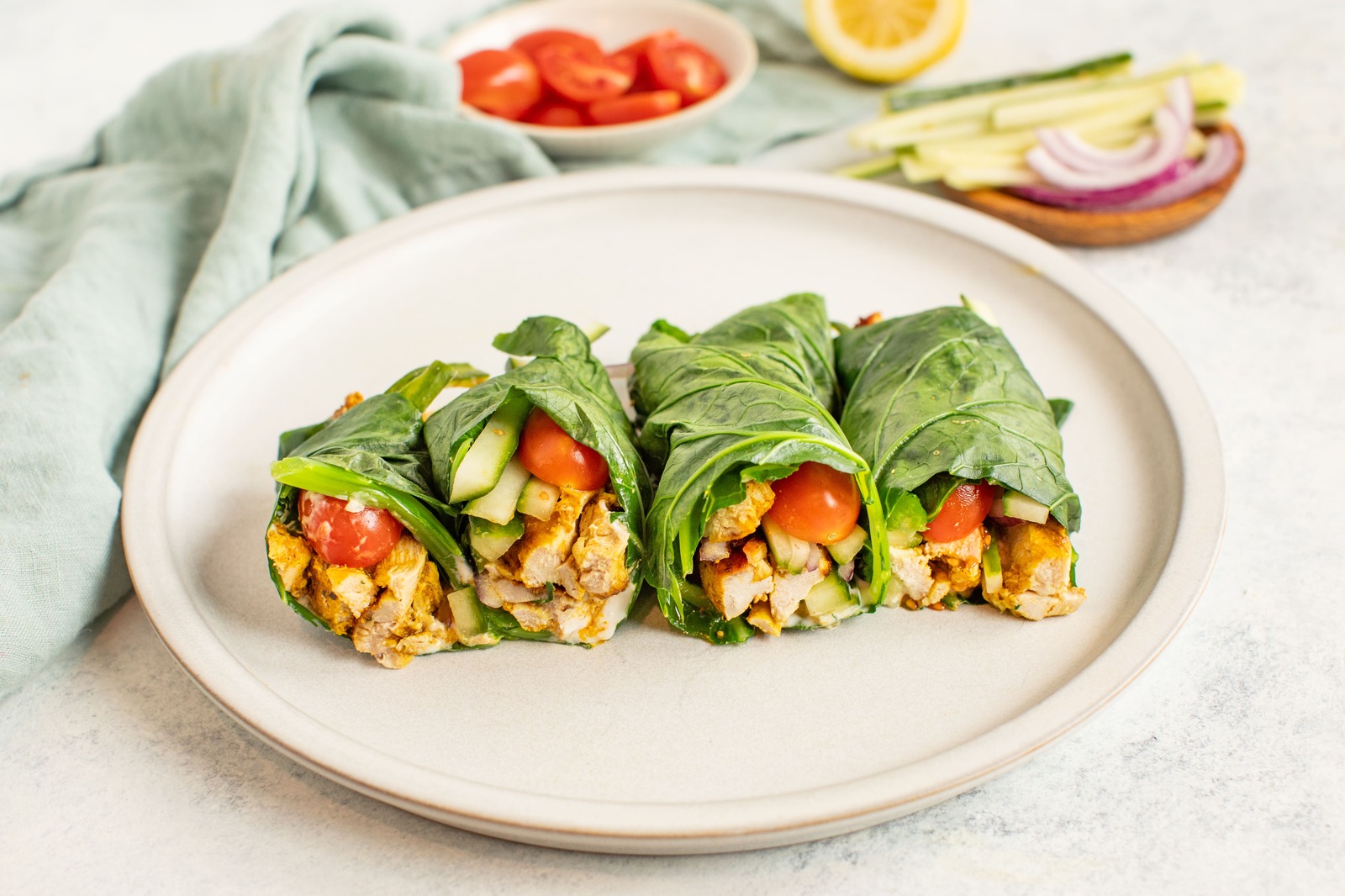
Bold, spiced chicken thighs wrapped in sturdy collard greens instead of flatbread, with a creamy yogurt-tahini sauce and fresh vegetables tucked inside. Swapping collard greens for bread keeps this version noticeably lower in carbs than a typical shawarma wrap.
Why it works: Collard greens replace the refined flatbread entirely, and the dish still delivers high protein and fiber, according to its official nutrition information.
Best for a low-carb take on shawarma night
7. Strawberry Jalapeno Salsa Chicken
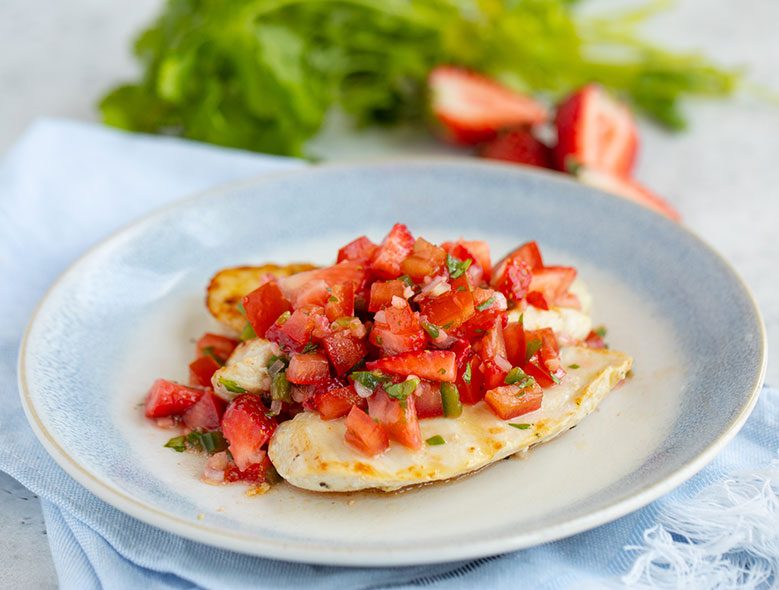
Grilled chicken topped with a fresh, chunky strawberry jalapeno salsa. The sweet and spicy combination keeps every bite interesting, and the salsa comes together in the time it takes the chicken to grill.
Why it works: Whole strawberries bring natural sweetness with fiber attached, and pairing them with grilled chicken keeps this dish’s overall glycemic impact low.
Best for a flavorful summer dinner
8. Strawberry Chicken Salad Sandwich
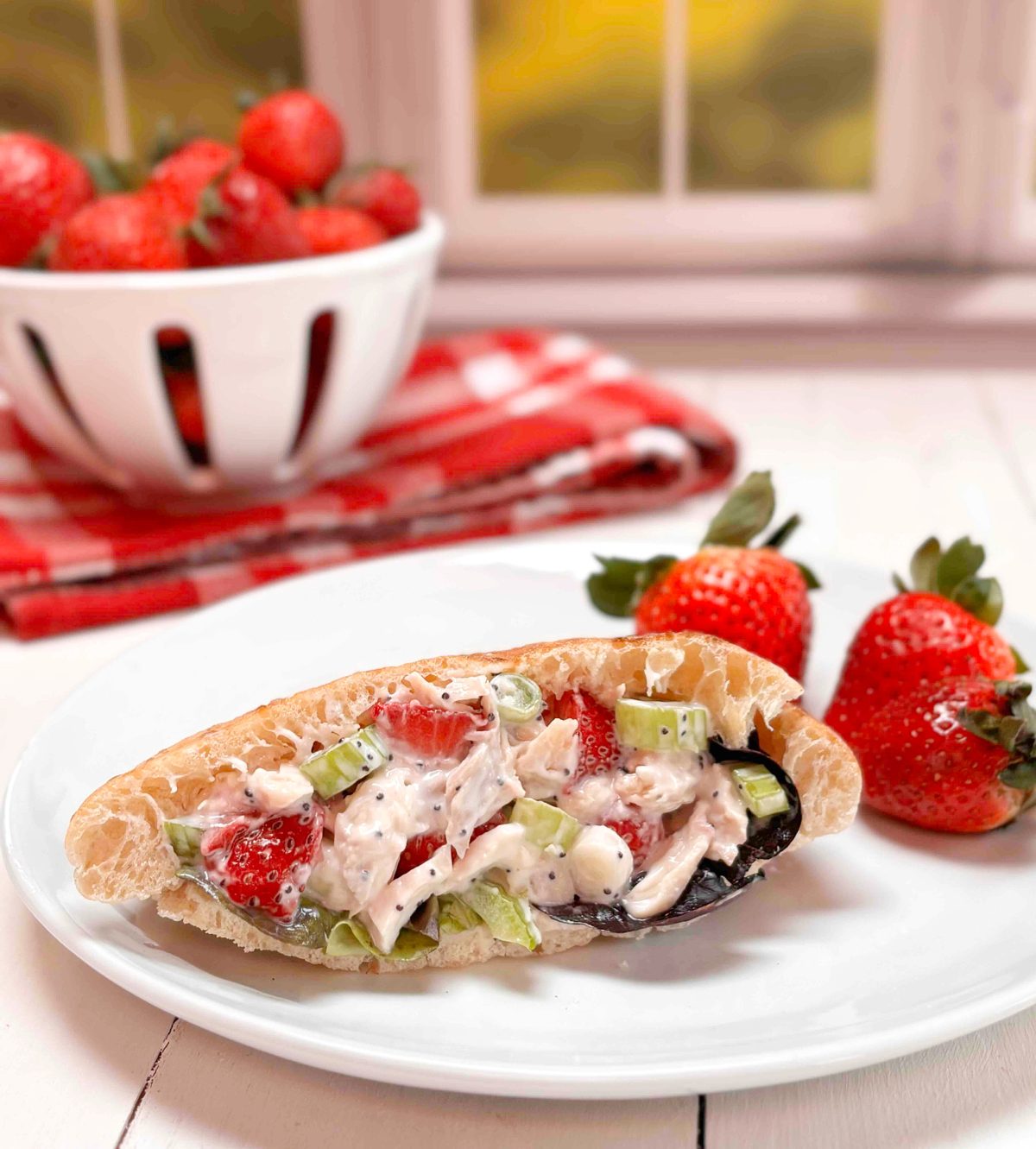
Shredded chicken tossed with chopped strawberries and a light dressing, stuffed into half a pita for a lunch that is a little more interesting than a plain chicken sandwich. The fruit adds a bright note without turning the whole thing into a dessert.
Why it works: Using half a pita instead of a full sandwich keeps the refined carb portion modest, while the chicken and fruit combination brings both protein and fiber.
Best for a light lunch with a twist
How Marinades Affect the Glycemic Load of Chicken
A marinade with a splash of honey, maple syrup, or fruit juice adds a small amount of sugar to the dish, but the amount is usually modest compared with a heavily sweetened bottled sauce.
Bottled barbecue sauces and teriyaki glazes, by comparison, often carry several teaspoons of added sugar per serving. Making your own marinade lets you control exactly how much sweetness goes in, and a little acid, like lemon or vinegar, can carry a lot of flavor without needing much sugar at all.
Building a Full Low Glycemic Chicken Plate
- Half your plate: non-starchy vegetables, roasted, grilled, or raw
- A third to a half your plate: chicken, thigh or breast
- A small portion of a lower glycemic carb, like a whole grain wrap, quinoa, or a small sweet potato
A Quick Comparison: Wraps and Buns
| Higher Glycemic Choice | Lower Glycemic Swap |
|---|---|
| White flour tortilla | Whole wheat tortilla |
| Hamburger bun | Collard green or lettuce wrap |
| White pita | Whole wheat pita, used in a half portion |
The Bottom Line
Chicken itself is a blank canvas for a low glycemic meal. These 8 recipes show how a whole grain wrap, a light marinade, and a vegetable-forward side turn a simple protein into a genuinely low glycemic dinner or lunch.
Still confused about what to eat with type 2 diabetes or prediabetes? Get the free Type 2 Clarity Kit from Type 2 Made Simple. It helps you understand what your diagnosis means, what to eat first, what numbers to track, and what to ask your doctor next, all in plain English.
Frequently Asked Questions
Does chicken have a glycemic index?
Not a meaningful one, since it carries almost no carbohydrate on its own. The glycemic impact of a chicken meal comes from what surrounds it.
Is chicken thigh or breast better for a low glycemic diet?
Either works well. Thighs carry a bit more fat, which some people find more satisfying, but neither affects the glycemic side of the equation differently.
Can I use fruit in a chicken marinade on a low glycemic plan?
Yes, in modest amounts used mainly for flavor, as several of these recipes do with honey or strawberries.
What is the best wrap for a low glycemic chicken wrap?
Whole wheat tortillas or collard greens both work well, keeping the refined carb content low compared with a white flour wrap.
Are these recipes good for meal prep?
Yes, most of these hold up well in the fridge for a few days, making them solid options for batch cooking.
Do bottled marinades and sauces raise the glycemic load of chicken?
Often yes. Bottled barbecue and teriyaki sauces can carry several teaspoons of added sugar per serving, more than a homemade marinade typically uses.
Should I remove the skin from chicken for a lower glycemic meal?
Skin does not affect glycemic load, since it carries no carbohydrate. It mainly affects fat content, which is a separate consideration.
This article is for general education only and is not medical advice. Always talk with your healthcare provider or a registered dietitian before making major changes to your diet, medication, or diabetes care plan.