6 Low Glycemic Soup Recipes for Cozy, Steady Meals

Soup feels like an easy, comforting choice, but not every bowl behaves the same way once you eat it. A thick potato soup or a cream soup loaded with heavy cream can carry a surprising amount of carbohydrate and fat for what looks like a simple lunch.
These 6 soups lean on vegetables, legumes, and lighter dairy choices instead, so you get something warm and filling without the heavy carb load.
These are general meal ideas. Always follow your healthcare provider’s guidance for your specific needs.
Why Soup Is a Sneaky Blood Sugar Wildcard
Soup can go either way for blood sugar, depending mostly on the base. A broth-based soup loaded with vegetables tends to sit low on the glycemic scale, while a thick, starchy soup, think potato or corn chowder, can carry more carbohydrate than people expect from something that looks light.
Legumes, like the lentils and black beans used in a couple of these recipes, are one of the better additions to a soup if you want it to stay filling without spiking blood sugar, since they bring both fiber and plant protein to the bowl.
Quick Tips for a Lower Glycemic Soup
- Choose broth-based or pureed vegetable soups over thick, cream-heavy chowders.
- Add legumes, beans or lentils, for fiber and protein in a vegetable soup.
- Watch portions of bread or crackers served alongside, they add up faster than the soup itself.
- Use light dairy, like half and half instead of heavy cream, if you want a creamy texture.
1. Spiced Ginger Carrot Soup

Carrots simmered with fresh ginger and warm spices, then blended into a smooth, bright orange soup. It tastes like something from a restaurant menu, but comes together with basic pantry staples.
Why it works: Carrots sit lower on the glycemic scale than a starchy soup base like potato, and the fiber in them slows down digestion.
2. Lentil Soup with Dates and Spinach
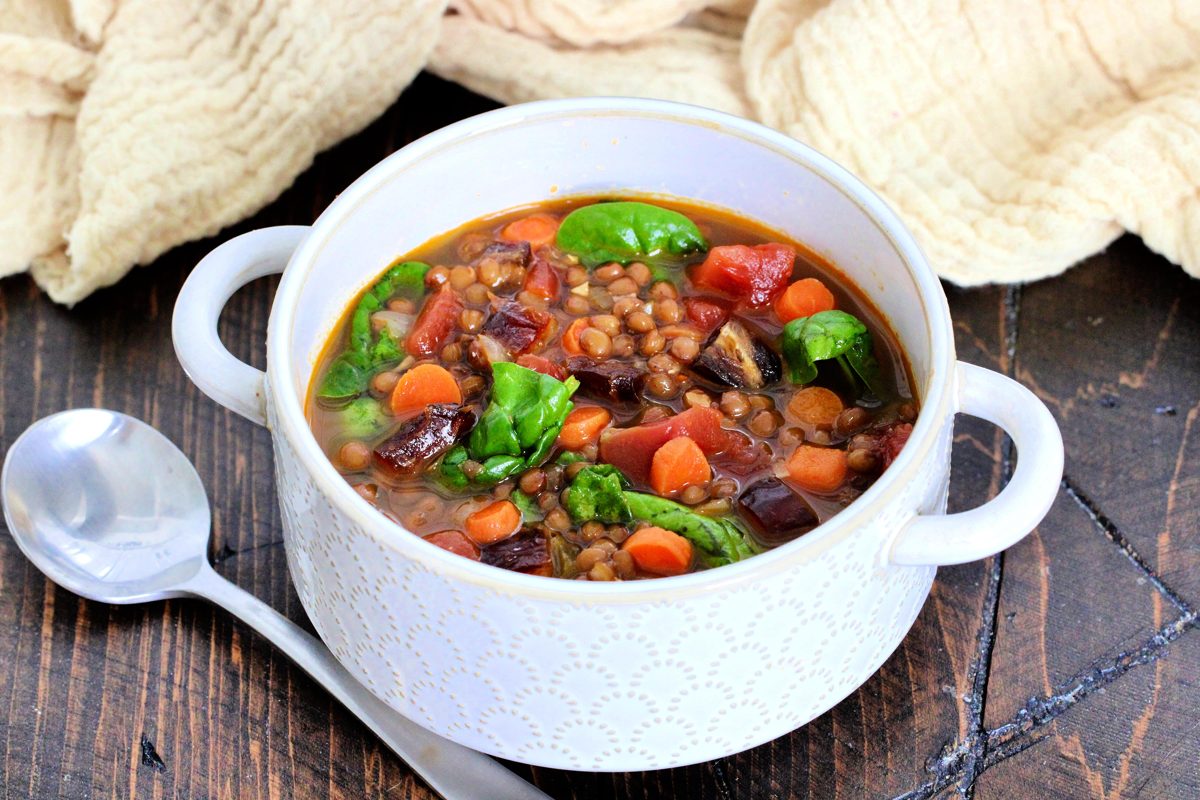
Lentils simmered with wilted spinach and a touch of chopped dates for natural sweetness. The dates are used sparingly, more like a seasoning than a main ingredient.
Why it works: Lentils bring plant protein and fiber together, a combination that keeps this soup filling without spiking blood sugar the way a plain starchy soup might.
3. Favorite Vegetable Soup
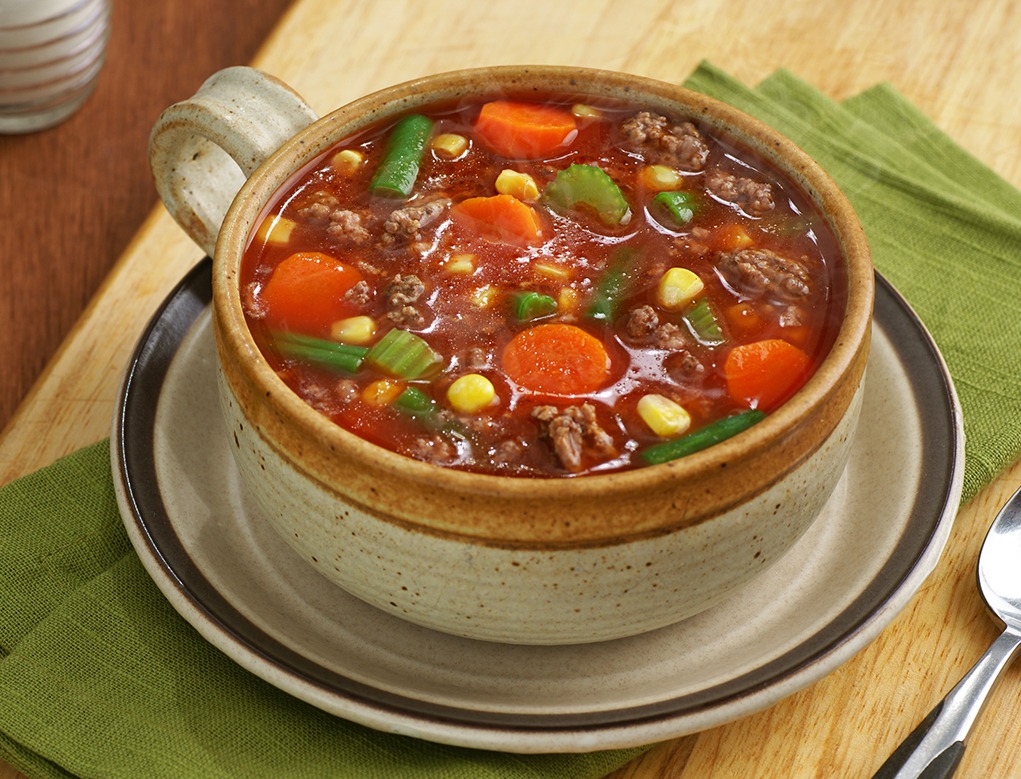
A simple, budget-friendly vegetable soup loaded with whatever vegetables you have on hand, simmered in a savory broth. Easy to make in a big batch for the week.
Why it works: Loaded with non-starchy vegetables and light on refined carbs, this soup is one of the easier lower glycemic options to keep on repeat.
4. Sweet Potato and Black Bean Soup
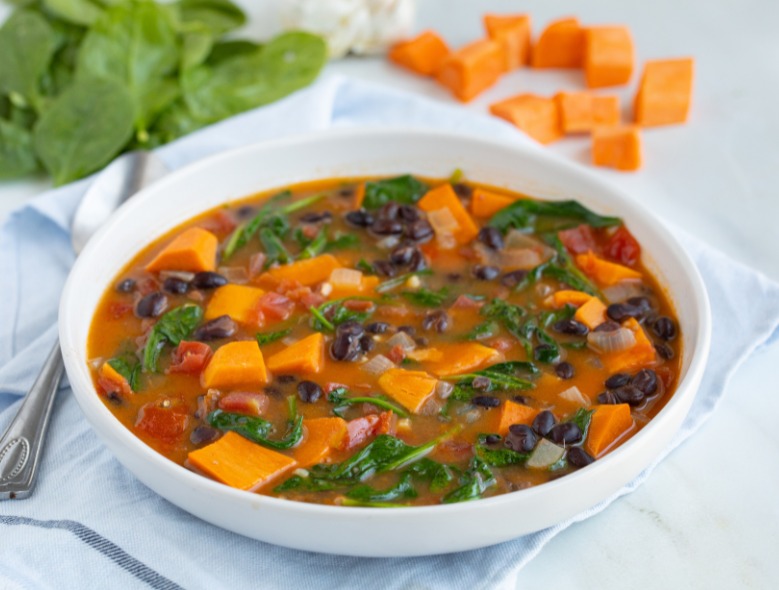
Tender sweet potato and black beans simmered with tomatoes and warm seasonings into a thick, hearty soup. Filling enough to be the entire meal on a cold day.
Why it works: Black beans bring fiber and plant protein, both of which help soften the impact of the sweet potato’s natural carbohydrate.
5. Garden Harvest Soup
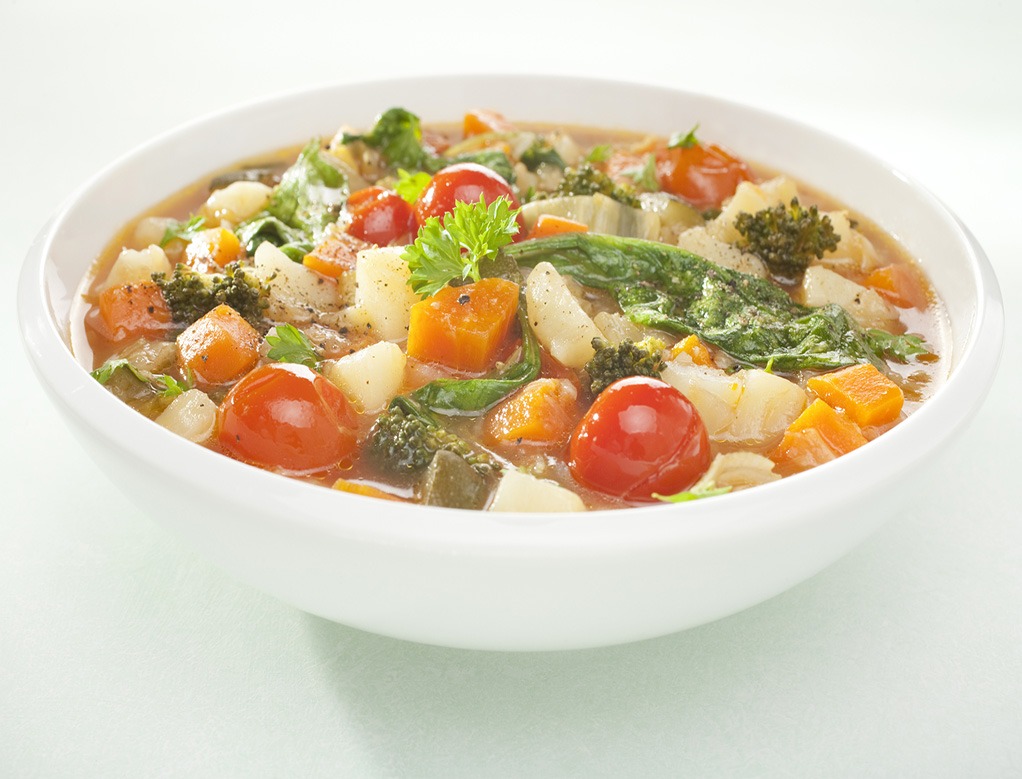
A vegetable-forward soup built around whatever is in season, tomatoes, zucchini, green beans, and herbs simmered together in a light broth.
Why it works: Mostly non-starchy vegetables in a light broth, this soup is naturally low in carbohydrate while still feeling like a real meal.
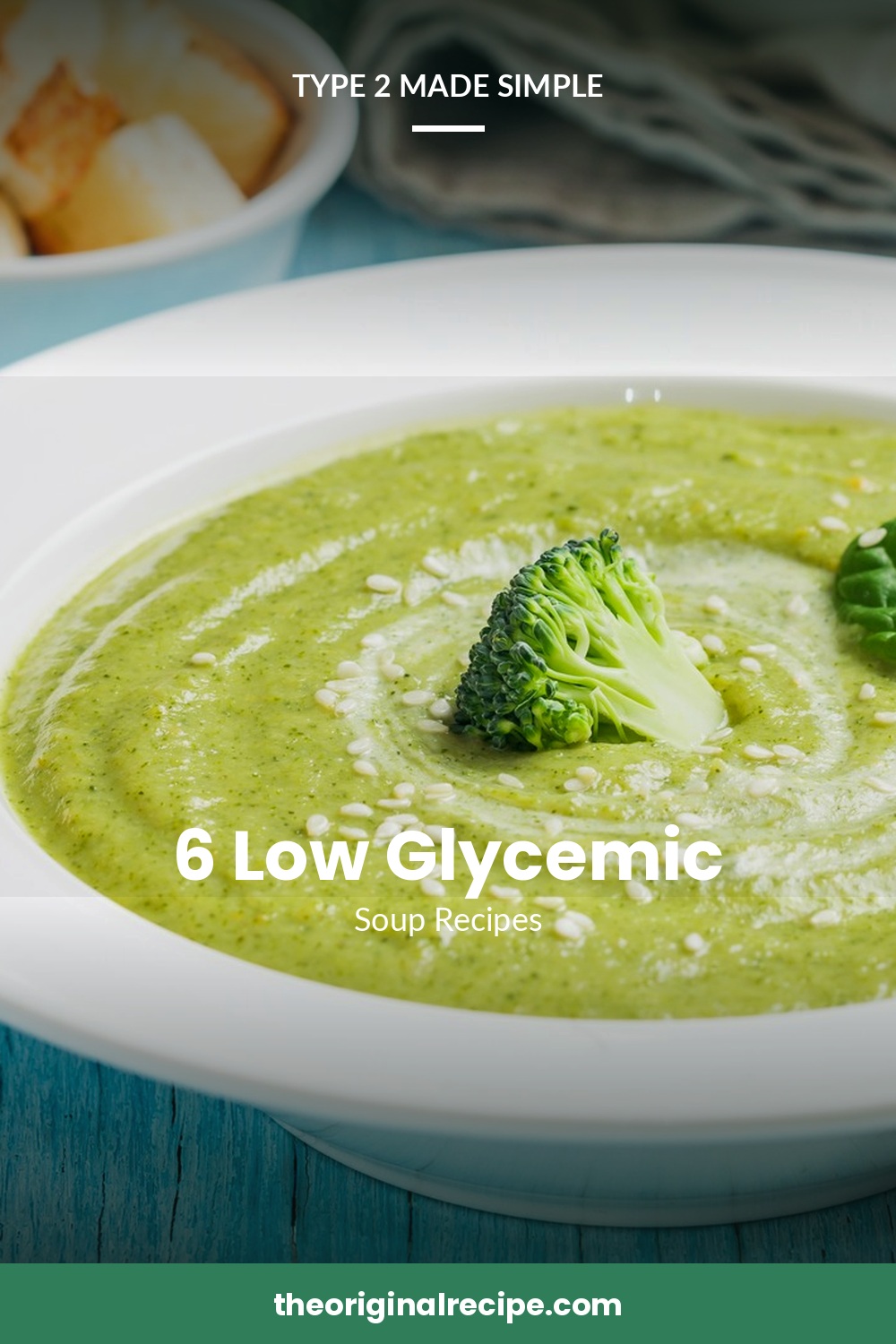
6. Cream of Broccoli Soup
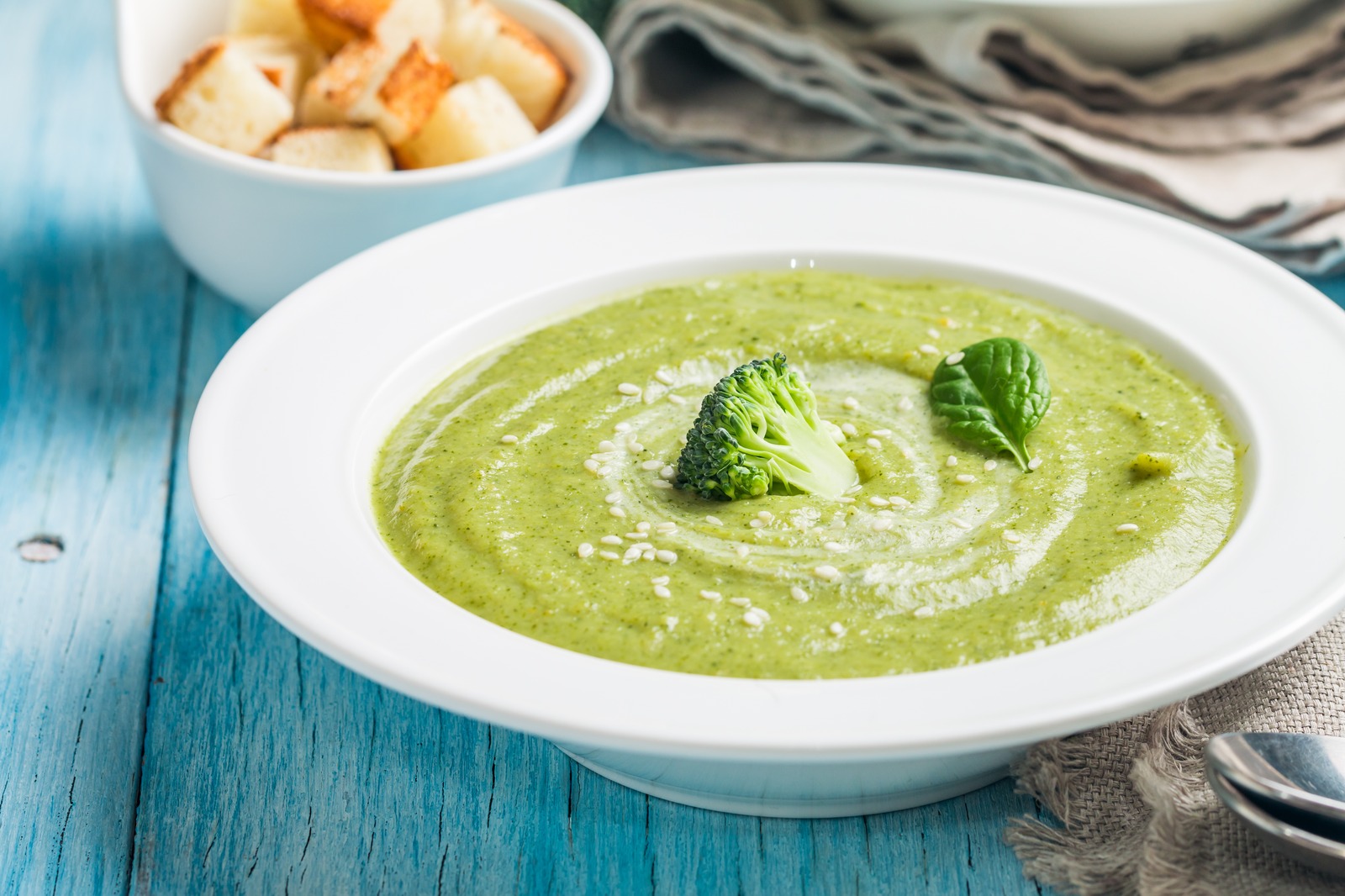
Broccoli simmered in broth, pureed until smooth, then finished with a small amount of half and half for a creamy texture without a heavy cream base.
Why it works: Broccoli is naturally low in carbohydrate, and using half and half instead of heavy cream keeps this version lighter than a traditional cream soup.
What to Serve Alongside Soup
A bowl of soup on its own often is not quite enough for a full meal, and what you pair it with matters just as much as the soup itself.
A small side salad, a slice of whole grain bread instead of white, or a piece of fruit rounds out the meal without adding a heavy dose of refined carbs. Skipping the basket of white dinner rolls is one of the simplest swaps you can make at a restaurant or at home.
Soup Bases Compared
| Higher Glycemic Choice | Lower Glycemic Swap |
|---|---|
| Potato or corn chowder | Pureed vegetable soup, like carrot or broccoli |
| Heavy cream base | Half and half or a small amount of yogurt |
| White bread or crackers on the side | Whole grain bread, smaller portion |
| Thick, flour-based gravy style broth | Light broth thickened with pureed vegetables |
Making Soup Ahead of Time
Most soups actually taste better the next day, once the flavors have had time to settle. Making a big batch on the weekend and portioning it into containers is one of the easiest ways to have a lower glycemic lunch ready to go all week.
Soups with legumes, like the lentil and black bean options here, tend to hold up especially well in the fridge or freezer, which makes them good candidates for batch cooking.
A slow cooker or an Instant Pot makes most of these even easier, since you can toss everything in on a busy morning and come home to a finished soup that night, with almost no active cooking time required.
Reading a Soup Label at the Store
Canned and boxed soups can be a genuine time saver, but the nutrition label tells a very different story from can to can. Two soups that look similar on the shelf can differ by 15 grams of carbohydrate or more per serving.
Check the sodium too, since canned soups often run high, and a lower sodium version usually exists for the same soup if you look for it. Skimming the ingredient list for added sugar, sometimes listed as cane sugar or corn syrup, is worth the extra few seconds.
The Bottom Line
A warm bowl of soup can absolutely fit into a lower glycemic way of eating, as long as it leans on vegetables, legumes, and lighter dairy rather than a heavy, starchy base. These 6 recipes give you a solid rotation to start with.
Still confused about what to eat with type 2 diabetes or prediabetes? Get the free Type 2 Clarity Kit from Type 2 Made Simple. It helps you understand what your diagnosis means, what to eat first, what numbers to track, and what to ask your doctor next, all in plain English.
Frequently Asked Questions
Is soup good for blood sugar?
It depends on the base. A broth or vegetable-based soup tends to be gentler on blood sugar than a thick, starchy chowder.
Can I freeze these soups?
Yes, most of these hold up well in the freezer for a few months, making them good options for batch cooking.
What is the best bread to pair with soup?
Whole grain bread in a modest portion is a reasonable choice, and it carries more fiber than white bread.
Are cream-based soups off limits?
Not necessarily. Using half and half instead of heavy cream, as the broccoli soup here does, keeps things lighter while still giving you a creamy texture.
Do beans and lentils make a soup more filling?
Yes, they bring both fiber and plant protein, which helps a soup hold you over longer than a vegetable broth alone would.
How much soup counts as a full meal?
There is no universal number, but a hearty bowl of a bean or lentil-based soup, paired with a side salad or piece of bread, works well as a full meal for many people.
Are canned soups okay to use if I am short on time?
They can be, just check the label for carbohydrate, sodium, and added sugar, since these numbers vary a lot between brands and flavors.
Is homemade soup always better than canned?
Not automatically, but it does give you full control over the sodium, carbohydrate, and ingredients, which canned soup does not.
This article is for general education only and is not medical advice. Always talk with your healthcare provider or a registered dietitian before making major changes to your diet, medication, or diabetes care plan.