How Your Body Regulates Blood Sugar, Explained Simply

Your body has its own system for keeping blood sugar steady.
Two hormones run the show. When you understand them, blood sugar stops feeling like a mystery.
Meet the Two Main Players
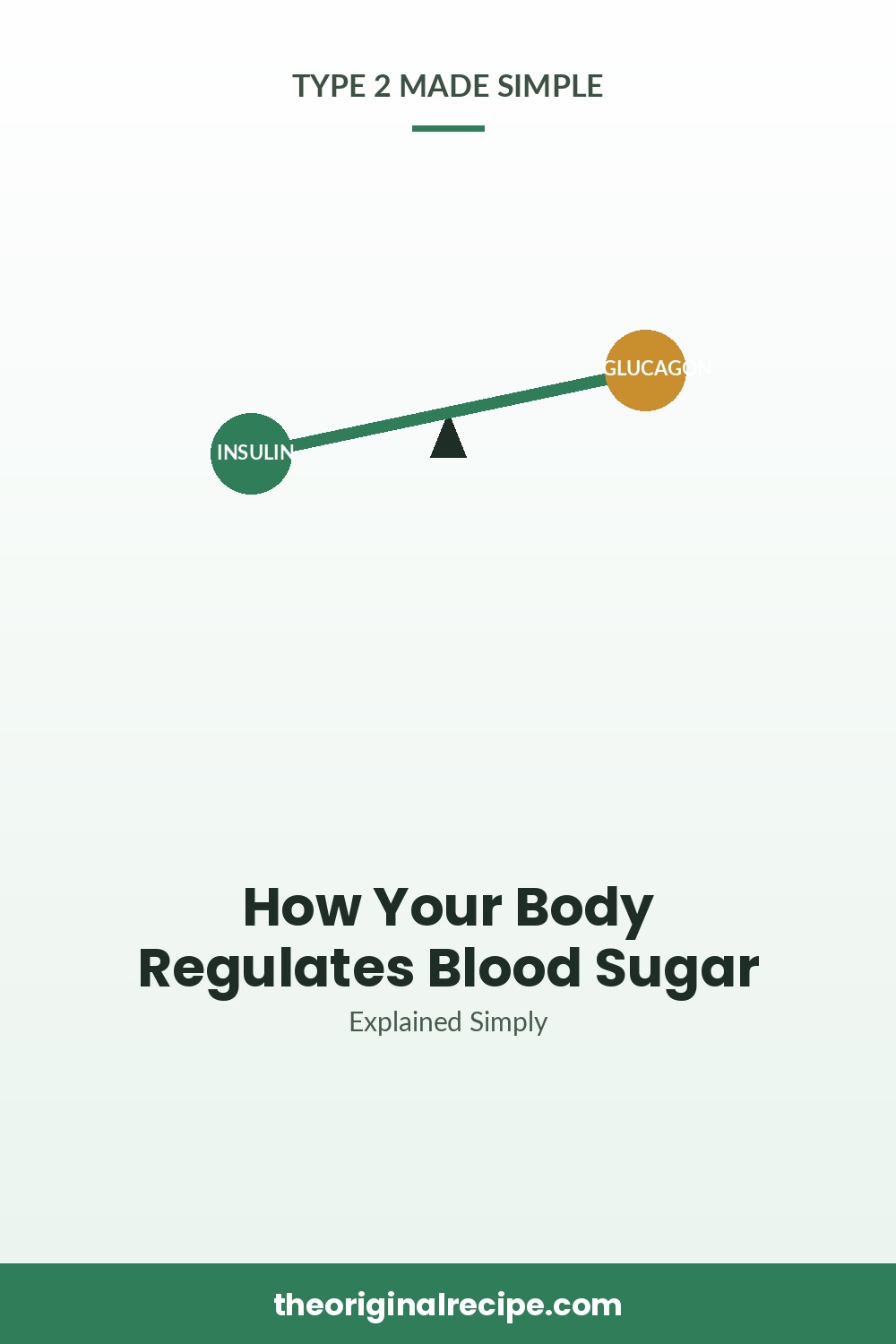
Your pancreas makes two hormones that work like a see-saw. Insulin. Glucagon.
They push blood sugar in opposite directions, and together they keep it in balance.
How Insulin Works
When you eat, your blood sugar rises. Your pancreas notices, and releases insulin.
Insulin acts like a key. It unlocks your cells, so they can pull sugar out of your blood and use it for energy.
Extra sugar gets stored too. Your liver turns it into a storage form called glycogen, ready for later.
How Glucagon Works
Glucagon does the opposite job.
When blood sugar drops too low, like between meals or overnight, your pancreas releases glucagon instead.
Glucagon tells your liver to release its stored sugar back into your blood. This brings your levels back up.
The See-Saw in Action
| Situation | Hormone Released | What Happens |
|---|---|---|
| After a meal, blood sugar rises | Insulin | Cells absorb sugar, liver stores extra as glycogen |
| Between meals, blood sugar drops | Glucagon | Liver releases stored sugar back into the blood |
In a body without diabetes, this system runs quietly in the background. You never notice it working.
What Goes Wrong With Type 2 Diabetes
With type 2 diabetes, cells stop responding to insulin as well as they should. This is called insulin resistance.
Your pancreas may make plenty of insulin. The message just does not land the way it should.
Sugar builds up in your blood instead of moving into your cells. Over time, your pancreas can also struggle to keep up with the demand.
Why This Matters for Daily Choices
Understanding this system explains why certain habits help.
- Exercise helps your muscles pull in sugar, even without much insulin. It works around some of the resistance.
- Fiber and protein slow down how fast sugar enters your blood, giving insulin an easier job.
- Sleep and stress control matter because stress hormones can work against insulin, making resistance worse.
- Weight management can improve how well your cells respond to insulin over time.
What to Do This Week
- Notice how your body feels after a balanced meal versus a carb-heavy one.
- Add a short walk after eating, when your blood sugar is naturally rising.
- Ask your doctor if insulin resistance is part of your own diagnosis.
- Read one section of this article again if any part felt confusing. It is a lot to take in at once.
The Bottom Line
Insulin and glucagon work like a see-saw to keep your blood sugar balanced.
With type 2 diabetes, that system gets harder to run smoothly. Food, movement, sleep, and stress control all help support it.
Want a simpler way to understand type 2 diabetes or prediabetes? Join Type 2 Made Simple and get the free Type 2 Clarity Kit, a plain-English starter kit to help you understand your numbers, make easier food choices, and feel more prepared for doctor visits.
Frequently Asked Questions
What two hormones regulate blood sugar?
Insulin and glucagon. Insulin lowers blood sugar by helping cells absorb it. Glucagon raises blood sugar by releasing stored sugar from the liver.
What is insulin resistance?
It is when your cells do not respond well to insulin, so sugar builds up in your blood instead of moving into your cells.
Can exercise help even without much insulin?
Yes. Muscles can pull in some sugar during activity, working somewhat independently of insulin.
Why does stress affect blood sugar?
Stress hormones can work against insulin, making it harder for your body to bring blood sugar down.
Does this system ever fully break down?
With long-standing type 2 diabetes, the pancreas can struggle to keep up with demand over time. This is one reason some people eventually need medicine or insulin therapy.
This article is for general education only and is not medical advice. Always talk with your healthcare provider or a registered dietitian before making major changes to your diet, medication, or diabetes care plan.